




Table of contents
Can Someone Watch TV in the Sukkah? So…does that make streaming in the Sukkah ideal? The basic balancing act The practical reality Bottom line Can Someone Take Down Sukkah Decorations Early? The issue: designated mitzvah items So are decorations included? What about portable travel Sukkot? Bottom line The Hurricane Problem The central debate So can you take a Sukkah down to protect it? Final Thought: The Sukkah Was Never Meant to Be Perfectly Practical
TVs, travel plans, hurricanes, and the surprisingly emotional question of taking the decorations down early.
Every Sukkot, someone eventually asks a question that would have completely baffled the sages of the Talmud.
Not because it’s unreasonable. Just because technology moved faster than halachic precedent.
Questions like:
Can someone stream a show in the Sukkah?
Is watching Netflix in there spiritually questionable…or technically ideal?
Can the decorations come down early before a trip?
What if a hurricane is coming and the entire Sukkah is about to become airborne?
And honestly? Fair questions.
Because the Sukkah occupies a strange halachic category:
It’s temporary – but holy.
Relaxed – but structured.
Home-like – but not too home-like.
Which is why modern Sukkot questions tend to land somewhere between “completely reasonable” and “this escalated quickly.”
Let’s unpack a few of them.
Can Someone Watch TV in the Sukkah?
Welcome to the weird intersection of streaming culture and holiness
At first glance, the answer seems obvious.
The Torah says:
“Teshevu k’ein taduru” – “You should dwell in the Sukkah the way you live in your home.”
Meaning:
eat there
relax there
spend time there
generally treat it like a living space
And for many people in 2025, “living space” includes screens.
So…does that make streaming in the Sukkah ideal?
Not so fast.
Because there’s another competing value:
Kedushat HaSukkah – the sanctity or holiness associated with the Sukkah.
And that creates tension.
The basic balancing act
On one side:
leisure activities are normal home behavior
relaxing in the Sukkah is part of the mitzvah
some sources even discuss casual activities (tiyul / leisurely behavior) happening there
On the other side:
the Sukkah isn’t supposed to become spiritually downgraded
not every “home activity” automatically belongs in a sacred environment
Which leads to the unspoken modern question:
Is the Sukkah an outdoor dining room…or a temporary sacred space with folding chairs?
The answer is: kind of both.
The practical reality
Most halachic discussions end up focusing less on “screens specifically” and more on:
the nature of the content
whether the activity fits the atmosphere of the mitzvah
and whether the behavior reflects dignity toward the Sukkah (kavod haSukkah)
A Torah lecture on video? Much easier conversation.
Reality TV marathon while balancing soup on a card table? Different vibe entirely.
Bottom line
The Sukkah is meant to feel lived in.
But “lived in” and “turning it into a backyard media lounge” are not necessarily the same thing.
Can Someone Take Down Sukkah Decorations Early?
The annual post-Yom-Tov packing temptation
There’s a moment near the end of Sukkot where everyone suddenly becomes very motivated.
Flights are booked.
Weather looks questionable.
The folding chairs have emotionally checked out.
And someone inevitably says:
“Can we just start taking things down now?”
The issue: designated mitzvah items
Halacha treats Sukkah materials and decorations as items designated for a mitzvah.
In practical terms: they become somewhat “set aside” (muktzah-like) for the duration of the holiday.
This applies not only to:
…but potentially even the decorations hanging inside.
(Shulchan Aruch Orach Chaim 638)
So are decorations included?
Generally, yes.
Decorations attached to the Sukkah take on a degree of sanctity connected to the mitzvah itself.
Meaning: that glittery hanging pomegranate suddenly became halachically important the second someone zip-tied it to bamboo.
Judaism is full of surprises.
What about portable travel Sukkot?
Here’s where things get more nuanced.
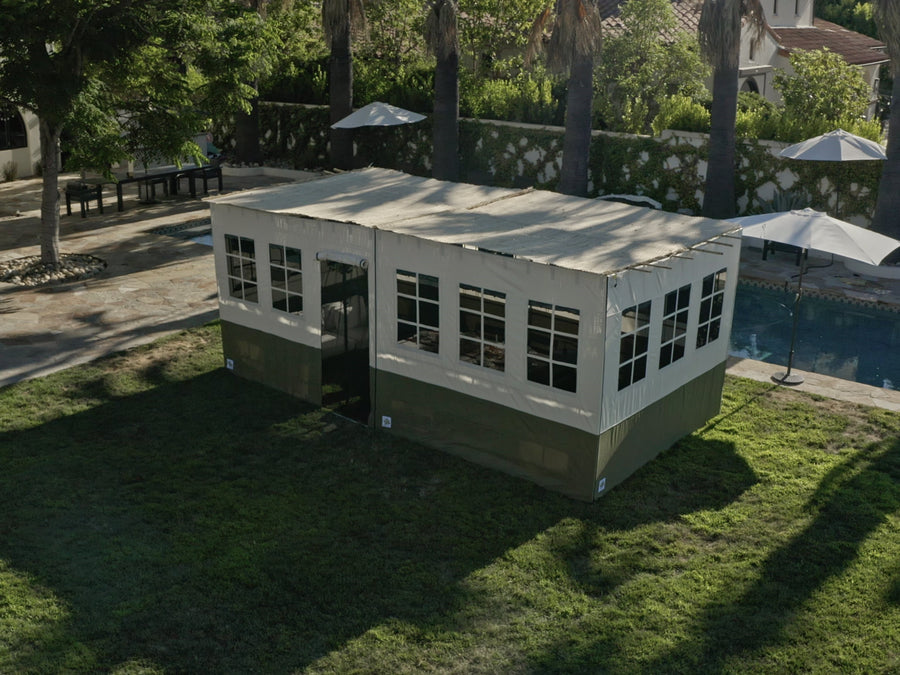
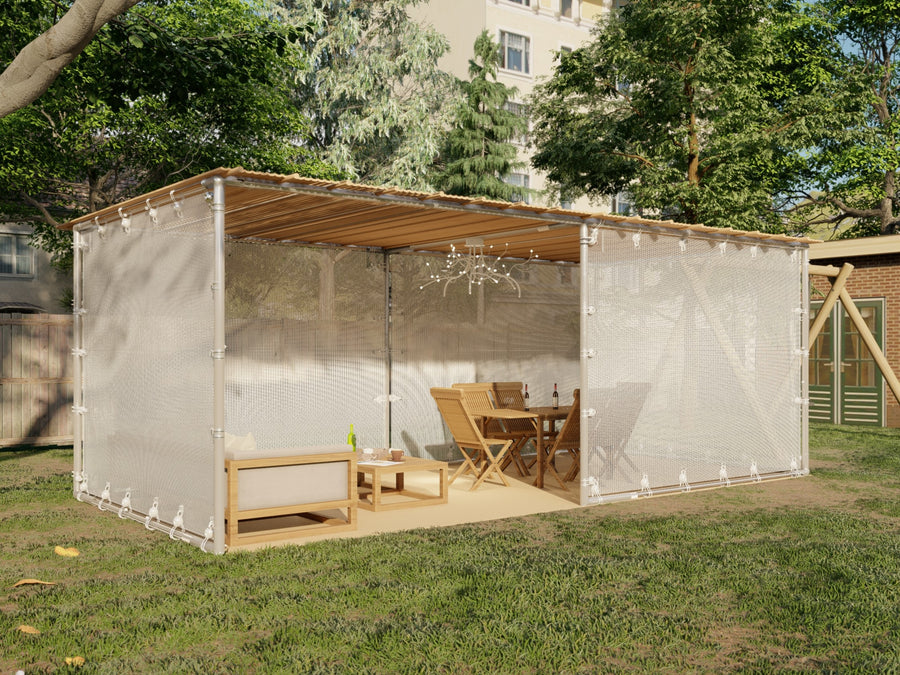
Portable or travel Sukkot – especially those intentionally built to be assembled and disassembled during Chol HaMoed (the intermediate festival days) – may receive more flexibility in certain cases.
Some authorities permit dismantling when:
the Sukkah will be rebuilt elsewhere
there’s a festival-related need
or the temporary nature was built into the original setup
Others are more hesitant, especially if dismantling appears disrespectful to the mitzvah.
Bottom line
If someone plans on taking down decorations early “just to get ahead,” the answer is generally: probably not.
The Sukkah gets treated less like party décor and more like an active mitzvah object until the holiday ends.
The Hurricane Problem
Or: when weather apps become halachic literature
There are few things more stressful than watching 70 mph wind warnings while staring at a structure made primarily of:
aluminum poles
and optimism
So naturally, people ask: Can the Sukkah be dismantled during Chol HaMoed to prevent damage?
Surprisingly, this is not a new category
The Talmud already discusses Sukkot built:
on boats
on wagons
in windy conditions
(Sukkah 22b)
Which honestly makes modern pop-up Sukkot feel pretty tame by comparison.
The central debate
The Gemara discusses whether a Sukkah must withstand:
ordinary land winds
or even unusually powerful winds
Rabbi Akiva ultimately holds that a Sukkah only needs to function as a temporary dwelling (dirat arai), not a permanent structure.
Which is comforting right up until weather radar turns purple.
So can you take a Sukkah down to protect it?
Here things become complicated.
The materials of the Sukkah are considered designated for the mitzvah throughout the holiday (Shulchan Aruch O.C. 638:1). That means:
walls
Schach
structural components
cannot casually be repurposed or dismantled mid-holiday.
Some authorities therefore argue: even concern over storm damage does not automatically justify taking it down.
Others discuss exceptions in cases involving:
rebuilding elsewhere
unavoidable loss
practical necessity
The emotional reality
This creates one of the most aggressively Jewish scenarios imaginable:
A person standing outside in pre-hurricane winds thinking:
“Technically…the Schach may still need to stay up.”
Final Thought: The Sukkah Was Never Meant to Be Perfectly Practical
A fully weatherproof entertainment center with mounted screens, built-in storage, and pre-packed teardown logistics might be very efficient.
It might even be beautiful.
But the Sukkah was never really designed to maximize convenience.
It was designed to pull people slightly out of it.
Out of the house.
Out of routine.
Out of permanence.
Even if, somewhere along the way, someone still tries watching a cooking show in it while nervously checking hurricane forecasts.