




Table of contents
Enter Queen Helene and Her Sky-High Sukkah The Key Concept: What Is a “Temporary Dwelling?” Why Does A Sukkah Have to Be 20 Amot Tall? But What About the Queen? The First Explanation: Two Separate Spaces A Different Way to Read the Sugya Temporary Doesn’t Just Mean Short The Tiny Sukkah Theory Re-Examining the Royal Sukkah Why the Talmud’s Structure Matters What This Teaches About Talmudic Debate The Takeaway: A Lesson From a Royal Sukkah Final Thought
What happens when a royal Sukkah seems to break the rules?
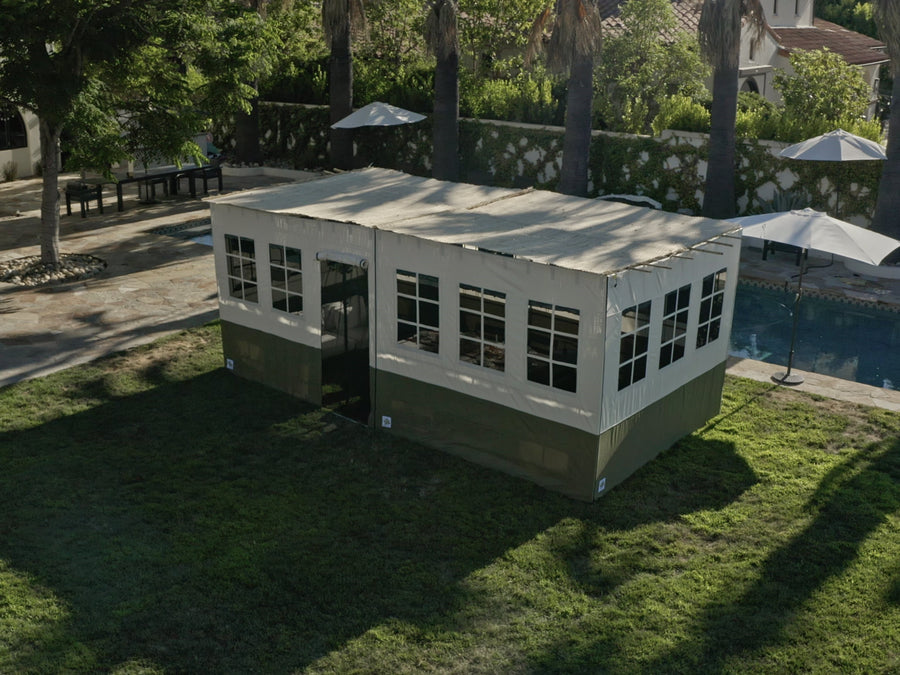
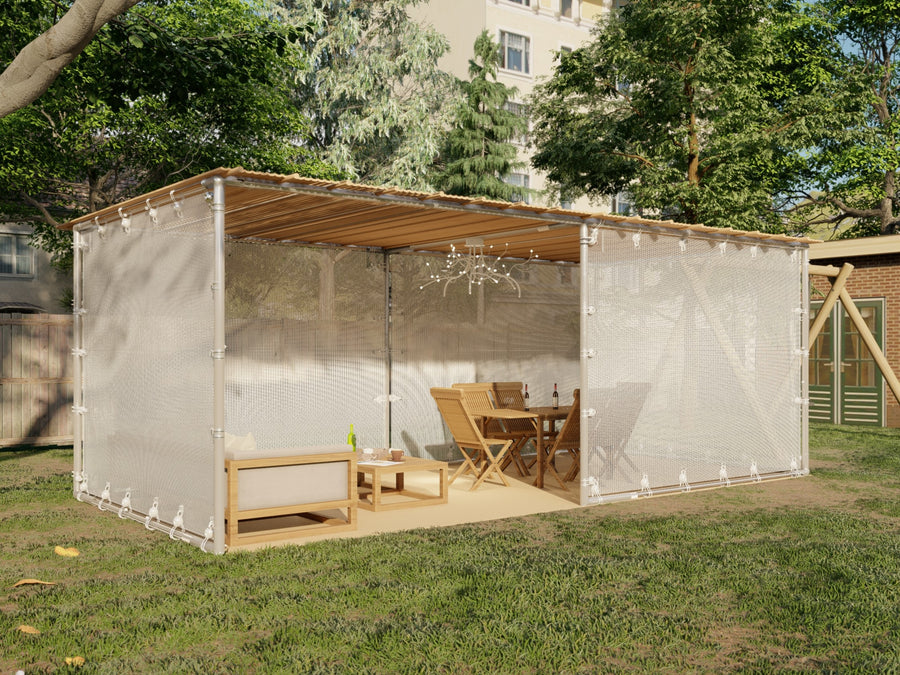
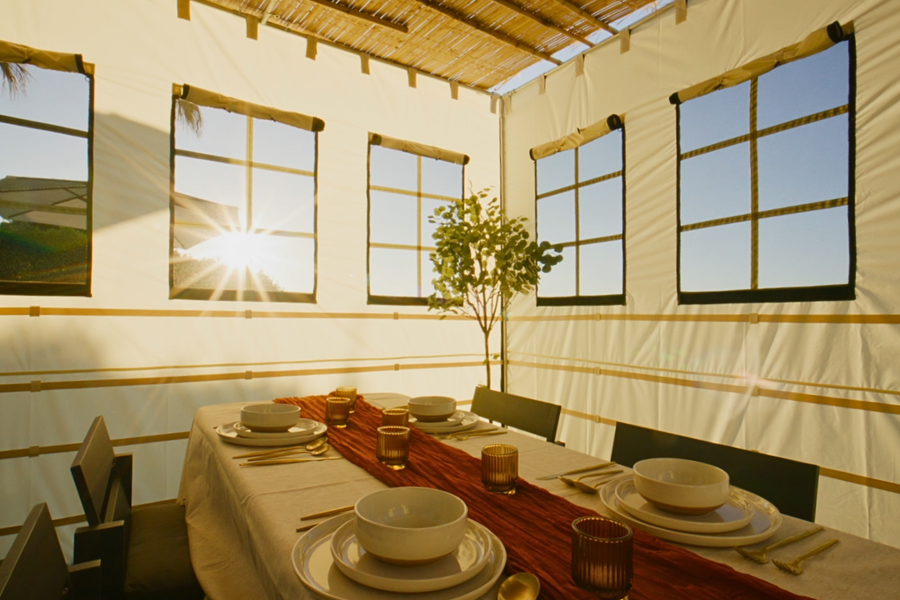
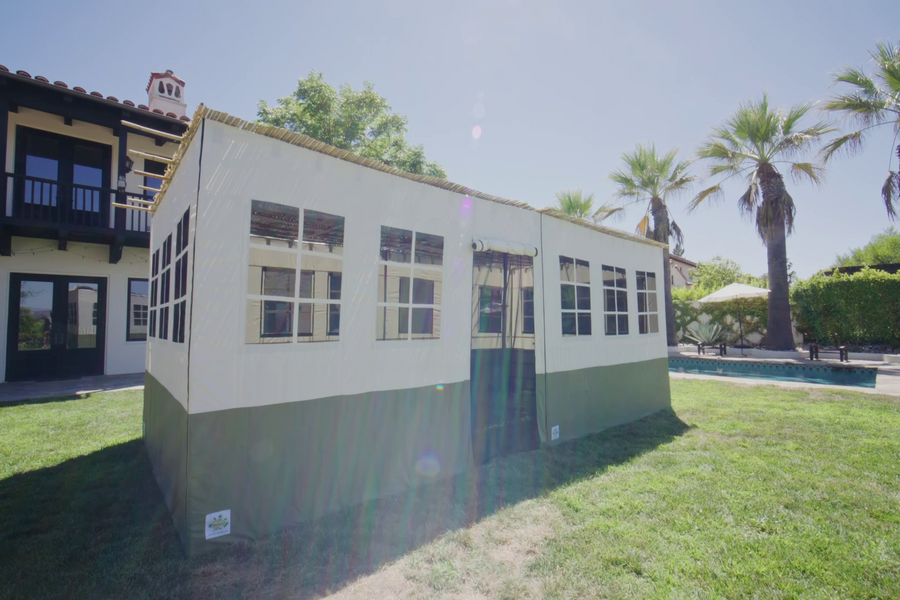
Every year around Sukkot, Jews around the world head outside to build a Sukkah – a temporary hut where meals are eaten and, for the especially enthusiastic, naps are taken.
The Torah describes the mitzvah simply:
“You shall dwell in Sukkot for seven days” (Leviticus 23:42).
But if there’s one thing the Talmud teaches us, it’s that nothing stays simple for long.
One of the most famous debates in Masechet Sukkah revolves around a deceptively straightforward question:
How tall can a Sukkah be?
According to the Mishnah, there’s a limit:
A Sukkah higher than twenty amot (approximately 35–40 feet) is invalid.
– Sukkah 2a
But not everyone agrees. Rabbi Yehudah argues that a Sukkah can be much taller – even forty or fifty amot high.
And to prove his point, he brings an impressive piece of historical evidence.
A queen.
And her very tall Sukkah.
Sukkah Height: Enter Queen Helene and Her Sky-High Sukkah
Rabbi Yehudah supports his position with a story from history:
“There was an incident with Queen Helene in Lod whose Sukkah was higher than twenty amot, and the elders would enter and exit it without saying anything.”
– Sukkah 2b
In other words: if the sages themselves walked into a Sukkah towering above the official height limit and didn’t object, doesn’t that suggest such a Sukkah must be valid?
At first glance, the argument sounds airtight.
But the Rabbanan (the majority of the sages) disagree with Rabbi Yehudah. According to them, a Sukkah higher than twenty amot is invalid.
And that raises an obvious question.
If the rabbis believe a Sukkah that tall is invalid…
why didn’t the elders protest Queen Helene’s towering Sukkah?
The Key Concept: What Is a “Temporary Dwelling?”
To understand the debate, we first need to understand a key Talmudic phrase:
דירת עראי (dirat arai)
This literally means a temporary dwelling.
According to several passages in the Talmud, the sages maintain that a Sukkah must be built as a temporary structure rather than a permanent one.
The Talmud says explicitly:
“The Rabbis hold that a Sukkah must be a temporary dwelling.”
– Yoma 10b
Rabbi Yehudah, however, takes the opposite view.
He believes a Sukkah can function as a דירת קבע (dirat keva) – a permanent dwelling.
And this disagreement helps explain their dispute about height.
Sukkah Height: Why Does A Sukkah Have to Be 20 Amot Tall?
The Talmud offers several explanations for the twenty-amot Sukkah height limit.
On Sukkah 2a, three sages offer three different theories:
Rabbah’s explanation
A Sukkah must allow a person to notice the roof covering (the Schach).
If the roof is too high, people stop paying attention to it.
Rabbi Zeira’s explanation
The shade must come primarily from the Schach rather than the walls.
If the Sukkah is too tall, the walls might create the shade instead.
Rava’s explanation
A Sukkah must be a temporary dwelling (dirat arai).
And a structure taller than twenty amot starts to look – and function – like a permanent building.
This third explanation introduces the core issue.
If a Sukkah must be temporary, then extremely tall structures may simply be too permanent to qualify.
But What About the Queen?
That brings us back to Queen Helene.
If the sages really believe a Sukkah must be temporary and under twenty amot, Rabbi Yehudah’s story seems like a devastating counterexample.
After all, the elders themselves entered the queen’s Sukkah and didn’t object.
Game over, right?
Not quite.
The sages have a response.
The First Explanation: Two Separate Spaces
Some classical commentators propose a straightforward solution.
Perhaps the queen’s Sukkah actually had two different sections.
The main Sukkah – under twenty amot and perfectly valid.
A private upper chamber – above twenty amot and technically invalid.
According to this explanation, the elders entered only the valid main area, which is why they didn’t object.
Rabbi Yehudah assumed the entire structure exceeded twenty amot, but the sages interpreted the layout differently.
This approach appears in the writings of the Tosafot Ri”d and Ritva, medieval Talmud commentators who grapple with exactly this problem.
It neatly resolves the contradiction.
But the Talmud itself never explicitly states that Queen Helene’s Sukkah had two rooms.
So the sugya (Talmudic discussion) continues to invite deeper analysis.
A Different Way to Read the Sugya
A closer look at the surrounding discussion in Sukkah 2a–3b reveals something interesting.
The Talmud spends a great deal of time discussing another dimension of Sukkah construction: its minimum size.
Specifically, the sages debate whether a Sukkah must measure four amot by four amot (roughly 6–7 feet square).
Rabbi Yehudah tends toward larger, more permanent structures.
But Beit Hillel – whose rulings generally become normative Jewish law – allow even very small sukkot.
The Talmud says:
“Rabbi says: any Sukkah that does not measure four by four amot is invalid.
But the sages say: even if it holds only one’s head and most of one’s body it is valid.”
– Sukkah 3a
This debate introduces a new dimension to the concept of temporary dwelling.
Temporary Doesn’t Just Mean Short
Up to this point, one might assume that “temporary” refers mainly to height.
But the discussion about minimum size suggests something more nuanced.
According to Beit Hillel, a Sukkah can be temporary not only because it is short, but also because it is small.
In other words, the category of dirat arai – temporary dwelling – may depend on multiple dimensions:
Height
Length
Width
This insight opens a fascinating possibility.
The Tiny Sukkah Theory
If “temporary dwelling” includes the dimension of size, then a Sukkah could potentially qualify as temporary even if it exceeds twenty amot in height – provided it is very small.
Imagine a tiny Sukkah, barely large enough to hold a person.
Such a structure might still feel temporary, even if its roof happens to sit far above the ground.
And suddenly the story of Queen Helene becomes much easier to explain.
Re-Examining the Royal Sukkah
According to this reading of the sugya, the sages could interpret the historical incident differently from Rabbi Yehudah.
Rabbi Yehudah assumed the queen and her sons were sitting in a large Sukkah more than twenty amot high.
But the rabbis might have imagined a different scene.
Perhaps Queen Helene and her sons were sitting in a very small Sukkah – one that measured less than four by four amot.
Such a structure could still qualify as a temporary dwelling, even if it happened to be tall.
If that were the case, the elders would have had no reason to object.
From their perspective, the Sukkah was perfectly valid.
Why the Talmud’s Structure Matters
This interpretation also helps explain something else curious about the sugya.
The Talmud carefully develops the concept of temporary dwelling across several passages before explicitly connecting it to the rabbinic view.
Later the Gemara states:
“The Rabbis say this only regarding a Sukkah, because it is a temporary dwelling.”
– Sukkah 3b
But earlier in the discussion, the sages had never explicitly defined Sukkah as temporary – until the arguments about size and dimensions began unfolding.
In other words, the sugya gradually builds a broader concept of dirat arai.
Temporary doesn’t simply mean flimsy.
It means not built like a permanent residence, whether because of height, size, or overall structure.
What This Teaches About Talmudic Debate
The debate about Queen Helene’s Sukkah highlights something fundamental about how the Talmud works.
The sages often preserve stories or historical anecdotes – like the queen’s Sukkah – not as final proof, but as starting points for analysis.
Different rabbis can interpret the same story in different ways.
Rabbi Yehudah sees it as proof that tall sukkot are valid.
The sages reinterpret the details in order to preserve their own principle:
that a Sukkah must function as a temporary dwelling.
And the result is a rich, multi-layered discussion that explores not just one measurement, but the deeper concept behind the mitzvah.
The Takeaway: A Lesson From a Royal Sukkah
In the end, Queen Helene’s towering Sukkah doesn’t actually settle the debate.
Instead, it becomes the spark for a deeper exploration of what makes a Sukkah…a Sukkah.
Is it the height?
The structure?
The size?
Or the overall sense that this is not a permanent home, but a temporary space meant for a week of dwelling under the open sky?
The sages ultimately lean toward that last idea.
A Sukkah is a dirat arai – a temporary dwelling.
But as the story of Queen Helene reminds us, the definition of “temporary” can be more flexible – and more fascinating – than it first appears.