




Table of contents
The Walls Aren't Supposed to Be Entertaining Wind Is Usually Worse Than Cold Yes, You Can Insulate It Heaters Are Not a Sign of Weakness Rain, Unfortunately, Doesn't Read Halachic Books Sometimes the Best Wall Is One You Didn't Build Bigger Sukkot Need Smarter Design Turns Out, Modern Sukkah Design Has Been Paying Attention Comfortable Doesn't Mean Less Kosher The Bottom Line
How to Stay Warm, Stay Dry, and Still Stay Within Halacha
Every year, somewhere in the Jewish world, someone confidently says:
"Sukkot is such beautiful autumn weather."
Those people do not live in Canada.
Or Scandinavia.
Or large parts of Northern Europe, where Sukkot arrives with sideways rain, icy winds, and temperatures that make everyone suddenly very interested in exactly how much time they really need to spend in the Sukkah.
The good news?
Halacha (Jewish law) doesn't require a Sukkah to feel like an endurance sport.
It requires a kosher Sukkah.
Those are two very different things.
If the weather during Sukkot is more "winter preview" than "crisp autumn evening," there are plenty of practical ways to make a Sukkah warmer, sturdier and more enjoyable – without compromising its validity.
The Walls Aren't Supposed to Be Entertaining
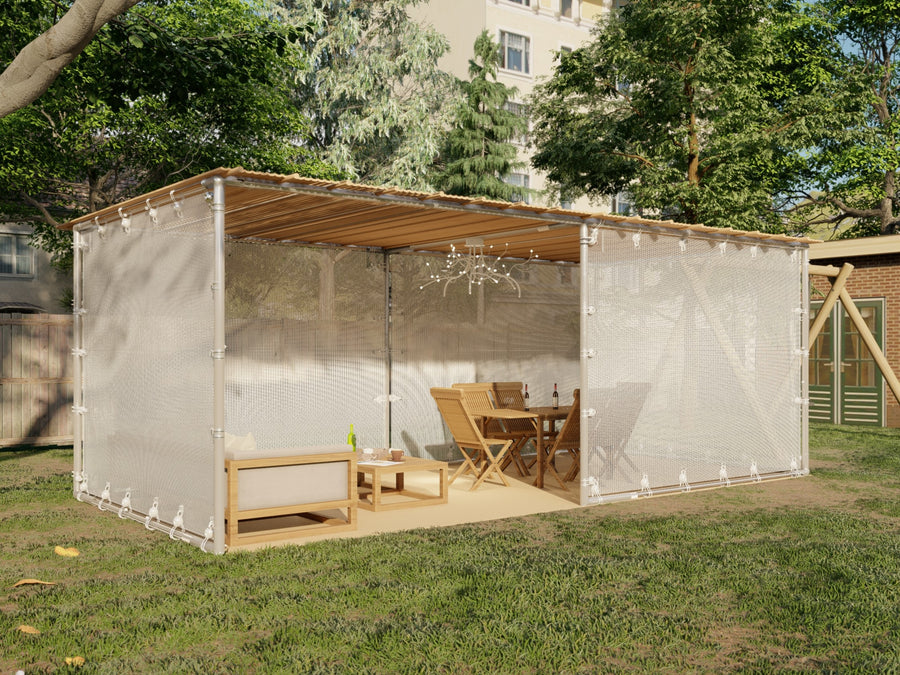
One of the biggest misconceptions about Sukkahs is that the walls are meant to flap dramatically every time someone opens the door.
They're not.
The actual halachic requirement is refreshingly practical: the walls need to stay put. Specifically, they shouldn't sway significantly in a normal wind. [Shulchan Aruch, Orach Chaim 630:10]
That's it.
Which means builders have a lot more flexibility than many people realise.
Wooden walls? Absolutely.
Heavy-duty fabric? Perfectly acceptable.
Weather-resistant materials? Also fine.
Insulated wall systems? No problem.
The issue isn't what the walls are made from.
The issue is whether they're behaving like walls or auditioning for a sailing competition.
Wind Is Usually Worse Than Cold
Ask anyone who's eaten in a flimsy Sukkah during a windy evening.
The temperature isn't what people remember.
It's the wall trying to introduce itself halfway through Kiddush.
Wind has a way of making everything feel colder than it actually is. It also makes meals significantly less relaxing when someone has to rescue napkins, decorations or an escaping tablecloth every few minutes.
A sturdy frame and tightly secured walls solve both problems at once.
They keep the structure halachically sound while making it feel like an actual place to eat rather than an outdoor experiment.
Funny how often those two goals overlap.
Yes, You Can Insulate It
Some people worry that making a Sukkah too comfortable somehow makes it "too permanent."
Fortunately, halacha isn't measuring thermal efficiency.
Adding insulation to the walls is generally acceptable because the primary halachic focus is on the Schach – the natural roofing material placed over the Sukkah – not whether the walls happen to keep the cold out. [Shulchan Aruch, Orach Chaim 630]
In fact, if insulation helps elderly relatives stay for the meal instead of retreating indoors after the first course, that's probably a feature, not a bug.
Heaters Are Not a Sign of Weakness
Somewhere along the line, people got the impression that a successful Sukkot involves losing feeling in at least three fingers.
It doesn't.
Portable heaters are widely used in colder climates, and there's no halachic objection to making the Sukkah comfortable enough to actually enjoy spending time there.
The mitzvah is to dwell in the Sukkah.
Not to recreate life in the Arctic.
(That said, keep heaters well away from fabric walls, decorations and anything else that shouldn't become "that story we tell every Sukkot.")
Rain, Unfortunately, Doesn't Read Halachic Books
Cold can be managed.
Wind can usually be blocked.
Rain remains stubbornly committed to doing whatever it wants.
Communities that regularly experience wet Sukkot have developed practical ways to work around it.
Some use protective Sukkah covers that keep the Schach dry until just before the meal.
Others use thicker Schach (the natural branches, bamboo or other vegetation that forms the Sukkah roof) so it takes longer for rain to work its way through.
It's less about defeating the weather.
More about buying yourself enough dry minutes to finish the soup before the clouds remember they had other plans.
Sometimes the Best Wall Is One You Didn't Build
Choosing where to build the Sukkah can make just as much difference as choosing how to build it.
Placing a Sukkah alongside an existing building provides valuable protection from wind, and in some cases the building itself can serve as one of the Sukkah's walls, provided the relevant halachic requirements are met. [Shulchan Aruch, Orach Chaim 630]
It's not particularly glamorous advice.
But neither is eating chicken soup while chasing paper plates around the garden.
Bigger Sukkot Need Smarter Design
Hosting ten people is one thing.
Hosting forty is something else entirely.
Larger communal Sukkahs need to think about airflow, warmth, durability and comfort in ways that a small family Sukkah doesn't.
Older guests shouldn't have to spend the meal wrapped in every coat they own.
Young children shouldn't be sitting in a permanent draft.
And ideally, nobody should have to hold the door shut every time someone walks in.
Comfort isn't the opposite of the mitzvah.
Sometimes it's what makes the mitzvah accessible in the first place.
Turns Out, Modern Sukkah Design Has Been Paying Attention
Interestingly, a lot of the features found on premium Sukkahs aren't really luxury features.
They're solutions to problems people have complained about for generations.
Walls that don't flap every time the wind picks up.
Heavy-duty waterproof fabric instead of material that starts regretting its life choices after the first rain shower.
Windows that let in natural light without inviting the entire October weather forecast inside.
Doors that actually stay closed instead of politely drifting open every thirty seconds.
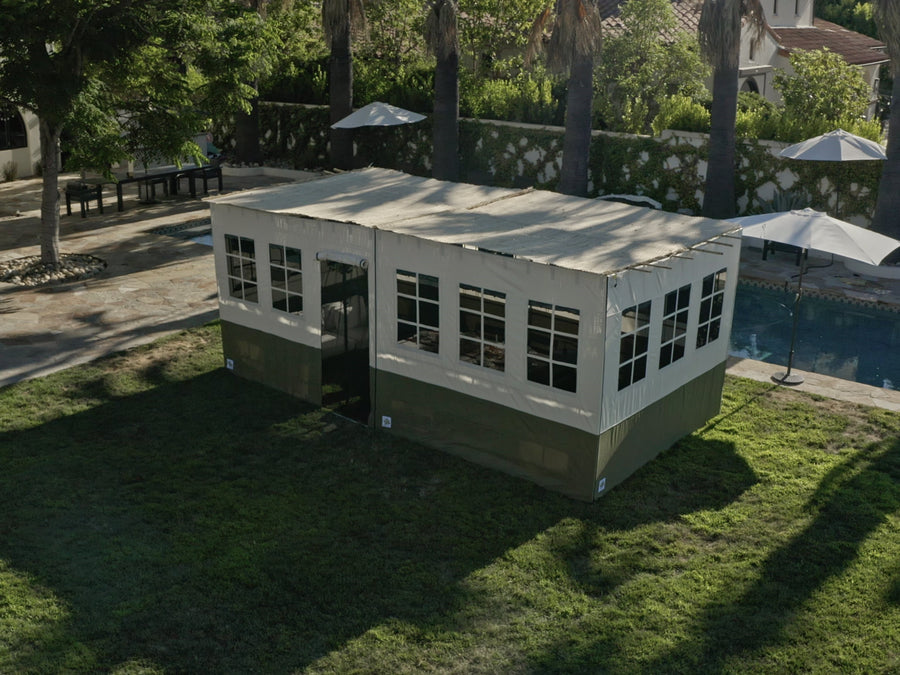
The Deluxe Sukkah Kit is a good example of this approach.
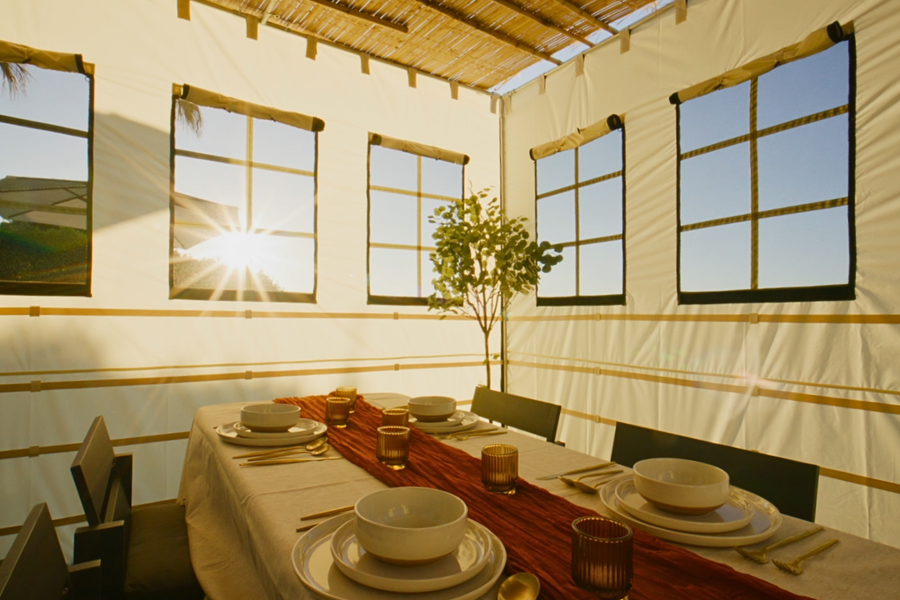
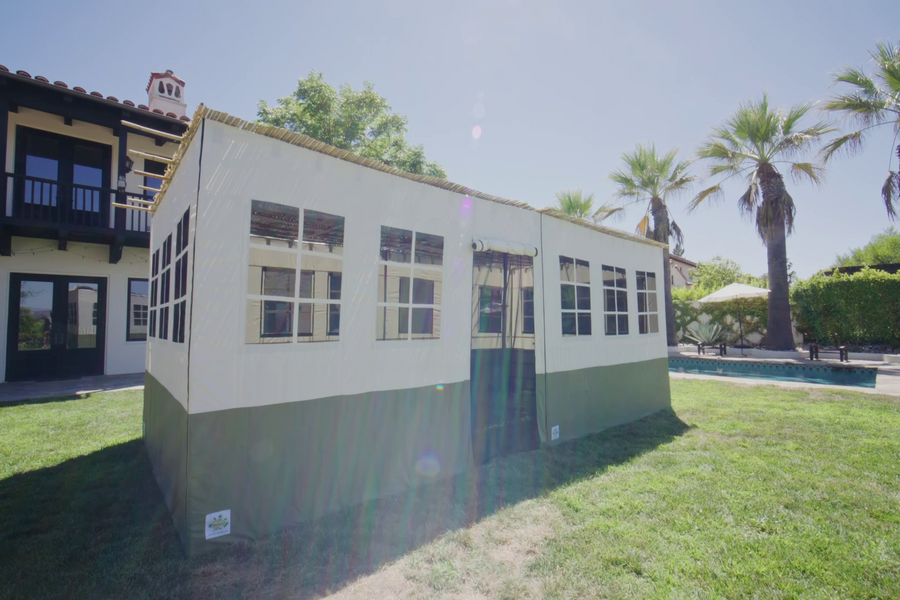
Its galvanised steel frame provides the rigidity needed to keep the walls stable, while the heavy-duty waterproof Oxford fabric helps block wind and rain without sacrificing the flexibility of a fabric Sukkah. Tight-fitting zippered walls eliminate the familiar "billowing canvas" effect, double-insulated windows help keep the warmth in, and the magnetic screen door closes behind people automatically – which is surprisingly satisfying after the twentieth person walks through.
None of those features change the halacha.
They simply solve practical problems that people in colder climates have been trying to solve for years.
And when the optional bundle includes the bamboo Schach mats and support poles as well, it also saves a last-minute trip to the hardware store. Which, depending on the weather, might be the biggest miracle of the holiday.
Comfortable Doesn't Mean Less Kosher
There's sometimes an unspoken assumption that if a Sukkah feels comfortable, it must somehow be less authentic.
Halacha says otherwise.
The Torah tells people to live in the Sukkah for the festival.
People naturally try to make their homes pleasant places to spend time.
That means sturdy walls.
A solid frame.
Protection from the wind.
Enough headroom to hang decorations without apologising to the chandelier every time someone stands up.
None of those things compete with the mitzvah.
They make it easier to fulfil.
The Bottom Line
Building a Sukkah in a cold or rainy climate isn't about choosing between comfort and halacha.
It's about understanding what halacha actually requires.
Stable walls are essential. [Shulchan Aruch, Orach Chaim 630:10]
Strong construction is encouraged.
Insulation is perfectly reasonable.
Portable heaters are fine when used safely.
Thoughtful placement can reduce exposure to wind.
And well-designed modern Sukkahs can quietly solve many of the practical frustrations that come with celebrating Sukkot in less-than-ideal weather.
Because if everyone spends the entire meal talking about how cold they are...
...they're probably not talking about the things Sukkot was meant to bring them together for.