







Table of contents
For many children, Sukkot has two great traditions.
Eating outdoors.
And strategically collecting enough candy to last until Chanukah.
Welcome to the Sukkah hop.
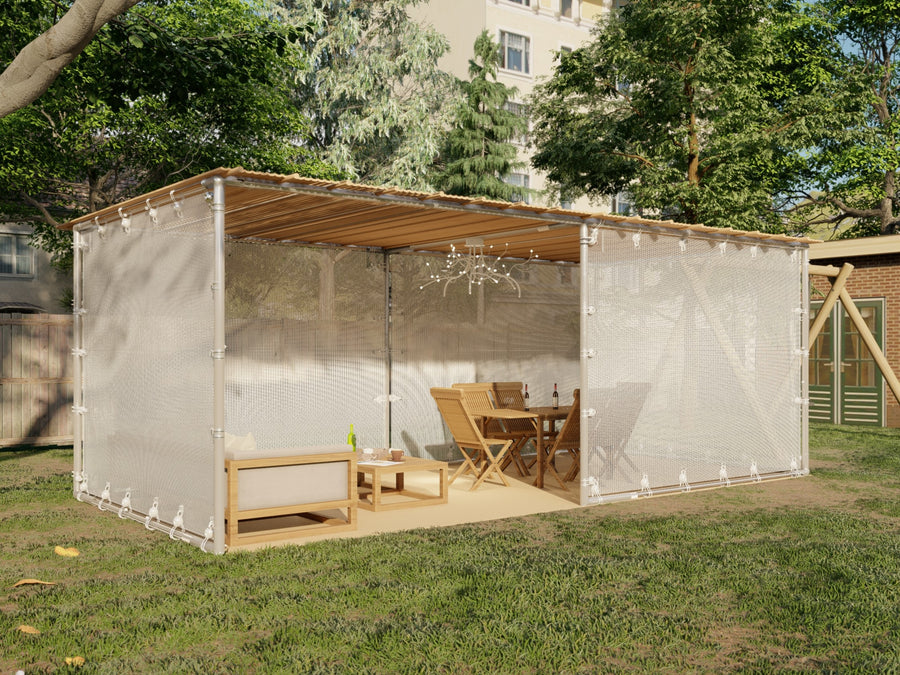
In many Jewish communities, groups of children (and sometimes adults) spend Chol HaMoed – the intermediate days of Sukkot – walking from one Sukkah to another. Along the way they admire decorations, sing songs, enjoy refreshments, and, if they're lucky, leave each stop with another handful of treats.
It feels like one of those customs that's been around forever.
Surprisingly, it probably hasn't.
Wait...What's a Sukkah Hop?
A Sukkah hop is exactly what it sounds like.
Families or community groups visit multiple Sukkahs over the course of an afternoon or evening. Some routes are carefully planned. Others are more spontaneous.
Every stop is a chance to meet friends, welcome guests, and experience how different families celebrate the holiday.
For children, it's also an excellent opportunity to compare whose Sukkah has the best decorations.
Or snacks. Usually the snacks.
A Tradition That's More Modern Than You Think
Unlike many Sukkot customs that date back centuries, the Sukkah hop appears to be a relatively recent innovation.
It's widely attributed to Shraga Feivel Mendelowitz, one of the founders of the Torah Umesorah school movement in North America during the mid-20th century.
At the time, some Jewish day schools remained open during Chol HaMoed (the intermediate days of the festival). Not every student came from an observant home, and many had never experienced eating or spending time in a Sukkah.
The solution was wonderfully simple.
Instead of merely teaching about the mitzvah (commandment), schools organized visits to local families' Sukkot so students could experience it firsthand. [Historical accounts attributed to Shraga Feivel Mendelowitz.]
From School Trip to Community Event
Somewhere along the way, the idea took on a life of its own.
What began as an educational outing gradually evolved into a community tradition.
Today, many neighborhoods organize Sukkah hops that have little to do with school.
Children wander from Sukkah to Sukkah.
Neighbors catch up.
Guests are welcomed.
And everyone somehow ends up eating far more cake than originally intended.
It's become one of those uniquely Sukkot experiences that combines celebration with community in a way few other holidays do.
More Than Just Candy Stops
At first glance, a Sukkah hop can look like organized sugar consumption.
But underneath it sits something much older.
Judaism places enormous value on hachnasat orchim – welcoming guests.
Throughout Sukkot, families intentionally invite others into their temporary homes to eat, talk, and celebrate together.
A Sukkah hop simply expands that idea.
Instead of visiting one host, an entire neighborhood opens its doors.
The result is a holiday that feels unusually connected.
Children meet neighbors they might not otherwise know.
Families see creative Sukkah designs.
Visitors experience the incredible variety that exists even within a single Jewish community.
Not bad for an afternoon that usually starts with, "Can we go to just one more Sukkah?"