




Table of contents
The Dream: A Roof That Lets the Mitzvah In...But Keeps the Rain Out Halacha Likes Temporary Things to Feel...Temporary Except...Not Everyone Agrees The Bigger Problem Usually Isn't Rain Can Schach Be Better at Keeping Heat In? There Comes a Point Where More Isn't Better The Hero Nobody Talks About: The Shlock Sometimes the Answer Is Everything Except the Roof The Bottom Line
Or: how far can you go before your Sukkah starts acting suspiciously like...a house?
Anyone who's celebrated Sukkot in Seattle knows the routine.
Check the weather.
See rain.
Open the shlock (your Sukkah's rain cover).
Close the shlock.
Open it again.
Repeat roughly seventeen times before lunch.
It's enough to make almost anyone wonder:
"Why not just build waterproof Schach?"
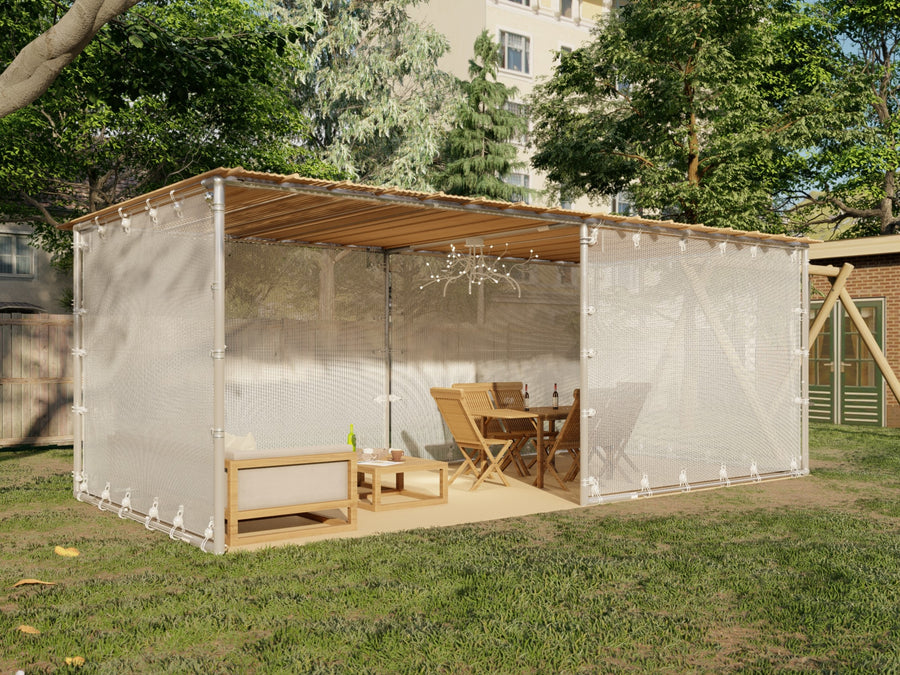
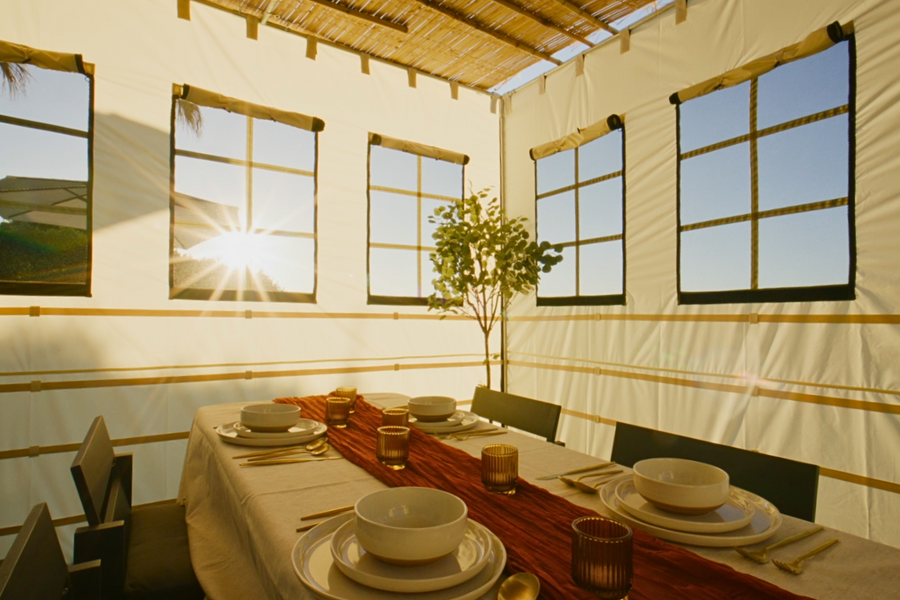
After all, Schach – the natural roofing placed on top of a Sukkah – is made from branches, reeds or bamboo. Surely there's some clever way to overlap natural materials like roof tiles and send the rain neatly into a gutter.
Problem solved.
Well...not quite.
As it turns out, halacha (Jewish law) has been thinking about this question for a very long time.
The Dream: A Roof That Lets the Mitzvah In...But Keeps the Rain Out
It's a wonderfully tempting idea.
Imagine layers of broad leaves or natural branches overlapping just enough to shed water.
No frantic tarp deployment.
No racing outside halfway through the meal because someone noticed three suspicious-looking clouds.
No soggy kugel.
In theory, everything would still be made from kosher natural materials.
So what's the problem?
Halacha Likes Temporary Things to Feel...Temporary
One of the defining characteristics of a Sukkah is that it's a temporary dwelling.
Not a log cabin. Not an extension. Not "the guest room with better ventilation."
Some authorities therefore argue that Schach shouldn't function like a permanent waterproof roof, because once it starts behaving like one, the Sukkah begins looking less like a temporary structure and more like a very enthusiastic garden shed.
Rabbeinu Tam famously argues that a Sukkah should allow rain to come through. His reasoning is surprisingly simple:
If a perfectly waterproof Sukkah were ideal, there'd never be a reason to leave when it rains.
Yet halacha recognizes that heavy rain can exempt someone from remaining in the Sukkah.
That only makes sense if rain getting through is part of the design in the first place. [Rabbeinu Tam, cited in Mordechai 733; Tur, Orach Chaim 631]
It's one of those arguments that's annoyingly logical.
Except...Not Everyone Agrees
Like many good halachic discussions, this one refuses to end neatly.
The Tur records Rabbeinu Tam's opinion but doesn't fully adopt it.
Later authorities, including the Bach, recommend being stringent (careful) and avoiding intentionally waterproof Schach.
The Mishnah Berurah also encourages following this stricter approach where possible.
Interestingly, the Shulchan Aruch itself doesn't explicitly mention the issue at all.
Which usually means one thing.
Prepare for centuries of further discussion.
The Bigger Problem Usually Isn't Rain
Interestingly, people in colder climates often discover that rain isn't actually the biggest issue.
It's wind.
Anyone who's ever stepped into a warm Sukkah only to feel every bit of heat immediately disappear through the roof knows exactly what's happening.
Warm air rises.
Schach, by design, is not exactly airtight.
It's a little like trying to heat the outdoors.
Which explains why people start brainstorming increasingly creative insulation ideas.
Can Schach Be Better at Keeping Heat In?
This question comes up surprisingly often in colder parts of the world.
Could thicker Schach help?
Would more layers of bamboo mats trap additional warmth?
Could leaves create a better insulating layer?
The general consensus is that denser natural Schach does tend to reduce heat loss, largely because it blocks more wind.
A tightly woven bamboo mat, for example, generally insulates better than widely spaced branches simply because fewer gaps mean less warm air escaping.
Which is nice. Up to a point. Because the goal isn't to build the world's first energy-efficient Sukkah.
It's still a Sukkah.
There Comes a Point Where More Isn't Better
This is where enthusiasm occasionally outruns halacha.
Stacking more kosher Schach is one thing.
Trying to engineer a completely weatherproof roof is something else.
Eventually the question stops being: "Will this keep us warmer?"
And starts becoming: "Is this still functioning like Schach?"
That's an important distinction.
Halacha generally welcomes practical improvements.
It just doesn't want the Sukkah quietly evolving into a conservatory.
The Hero Nobody Talks About: The Shlock
Ironically, the solution many communities have settled on isn't changing the Schach at all.
It's protecting it.
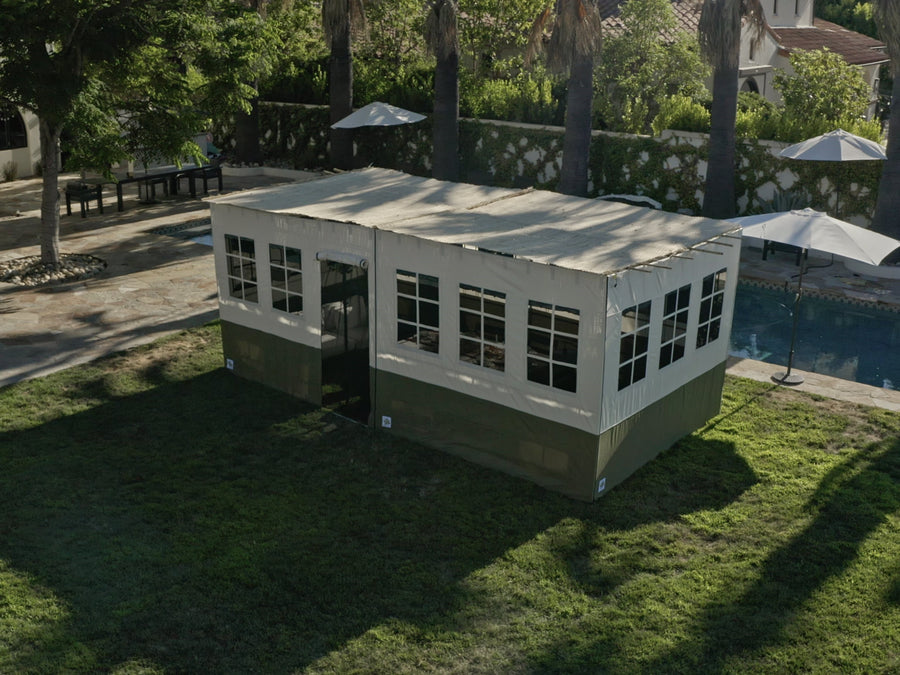
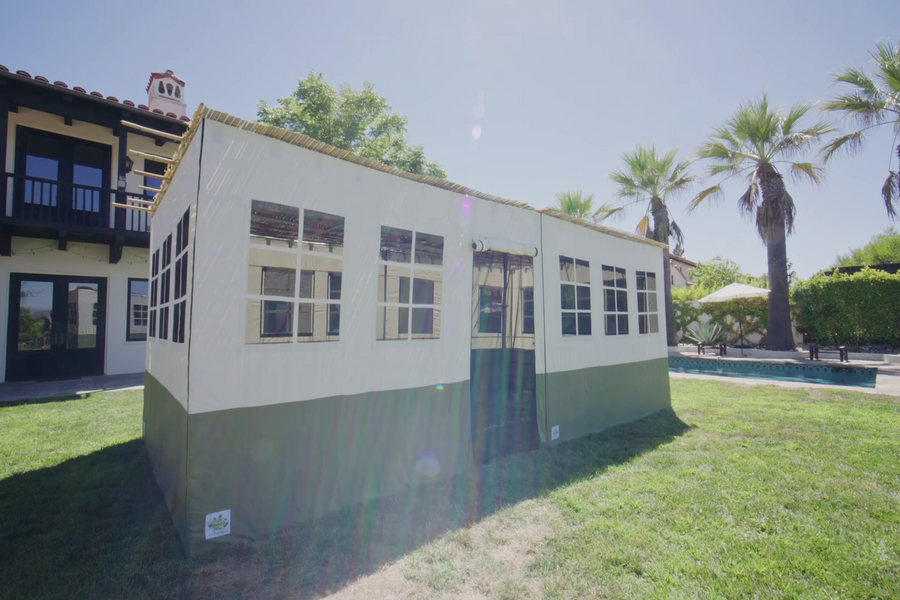
A shlock – a movable rain cover placed over the Sukkah when needed – keeps the Schach dry without permanently changing how it functions.
Think of it as a raincoat.
Not a replacement roof.
And unlike experimental gutter-Schach, it's already a well-established solution in rainy climates.
If you're thinking about building one, we've already put together a complete guide covering everything from materials and hinges to the halachic considerations of opening and closing it on Shabbat and Yom Tov.
(It also contains what is almost certainly more discussion about tarps than anyone expected to read voluntarily.)
Sometimes the Answer Is Everything Except the Roof
Here's the funny thing.
People often spend hours trying to improve the Schach...when the biggest gains come from everywhere else.
Stronger walls.
Reducing drafts.
Using heaters.
Closing gaps where wind sneaks in.
By the time those improvements are made, the roof often stops being the biggest problem.
The Bottom Line
Everyone wants the same thing: A Sukkah that's warm enough for guests.
Dry enough to finish dinner.
And kosher enough that nobody has to start measuring leaf angles with a ruler.
The temptation to create completely waterproof Schach is understandable – especially if your local weather forecast treats sunshine as an optional feature.
But halacha has traditionally viewed the temporary nature of the Sukkah as part of the mitzvah, and many authorities caution against turning the roof into something that behaves like a permanent one. [Rabbeinu Tam; Bach; Mishnah Berurah]
So if rain keeps threatening the meal, the smartest solution usually isn't reinventing Schach.
It's protecting it.
After all, sometimes the best roof for a Sukkah...is the one that knows when to get out of the way.