




Table of contents
The Great Chol HaMoed Packing Debate Your Decorations May Have Become More Important Than You Realize What About Taking Down the Actual Sukkah? Enter the Hurricane The strict approach The more lenient approach But Wait...What About Portable Sukkot? Final Thought: The Sukkah Was Never Meant to Be Perfectly Practical
The surprisingly complicated answer to what seems like a very simple packing question.
Every year, sometime around Chol HaMoed, it happens.
The weather forecast turns ominous.
The family is heading out of town.
The neighbors have already started packing their patio furniture.
And someone inevitably looks at the Sukkah and asks:
"Can we just take it down now?"
After all, the meals are done. The trip is booked. The wind is picking up. Surely taking apart a temporary structure before it gets destroyed is the responsible thing to do?
As it turns out, halacha (Jewish law) has quite a bit to say about this.
Because while a Sukkah may be temporary, it isn't treated like a temporary object.
At least not until Sukkot is actually over.
The Great Chol HaMoed Packing Debate
Most people assume there are only two options:
Leave the Sukkah standing
Take the Sukkah down
Halacha, however, loves introducing a third option: "It depends."
And in this case, it depends on why someone wants to dismantle it, what they're taking apart, and what happens next.
Which explains why a seemingly simple question has generated discussions involving:
mitzvah sanctity
muktzah (items set aside from use)
hurricane forecasts
and rebuilding projects
Welcome to Sukkot.
Your Decorations May Have Become More Important Than You Realize
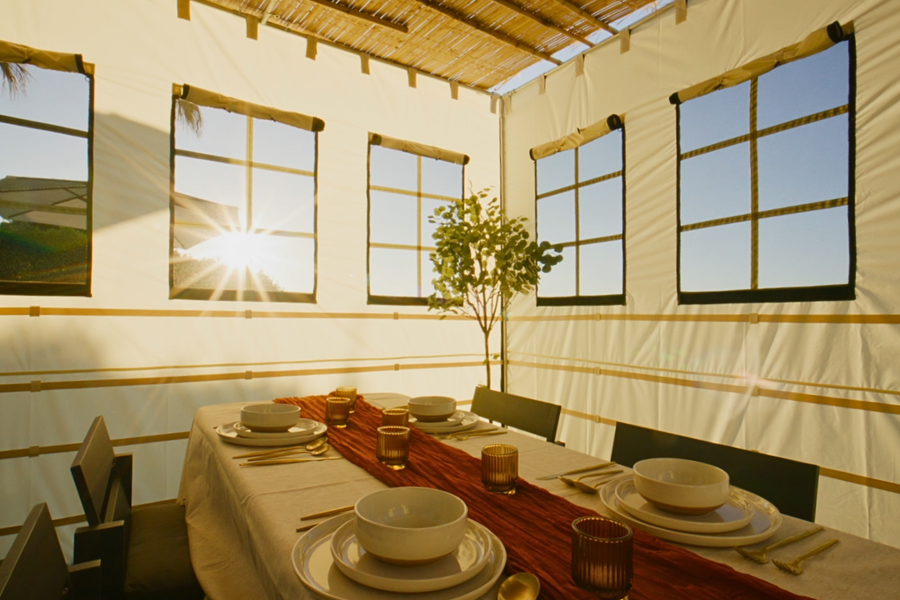
The hanging pomegranate problem
A person hangs decorations in the Sukkah.
Maybe some fruit.
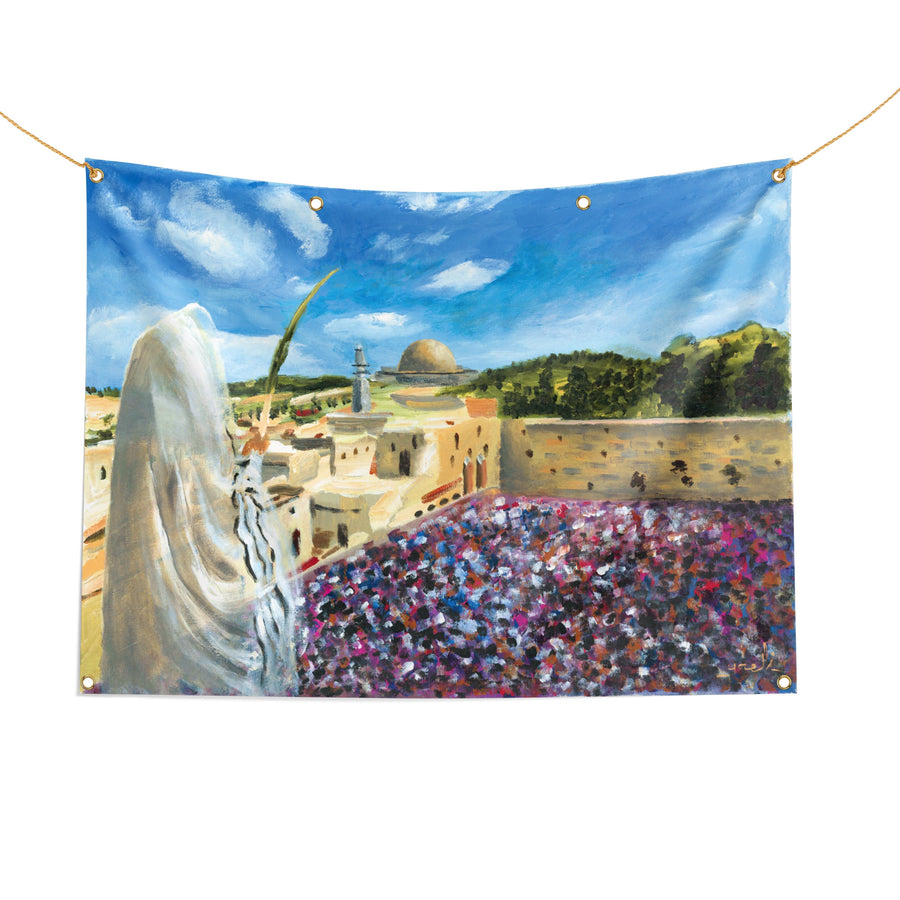
Maybe a colorful mural.
Maybe a decorative chain that took three children, two grandparents, and one minor family argument to complete.
Once those decorations become part of beautifying the mitzvah, they take on a different status.
The Shulchan Aruch discusses how decorations designated for the Sukkah become connected to the mitzvah and generally remain reserved for that purpose throughout the festival (Orach Chaim 638).
Translation: That paper chain is no longer just a paper chain.
For one week, it's mitzvah real estate.
So can they come down early?
Generally speaking, the decorations are expected to remain part of the Sukkah until the end of the holiday unless special arrangements or conditions were made beforehand.
Which means that the annual urge to start packing up halfway through Chol HaMoed may need to wait a little longer.
What About Taking Down the Actual Sukkah?
Surely the walls are different?
This is where things get interesting.
Some opinions view dismantling the Sukkah itself as a problem because the materials have been designated for a mitzvah.
Others focus less on the dismantling and more on what happens afterward.
Are the materials being used for something else?
Is the Sukkah being taken apart simply because someone wants the backyard back?
Or is there another legitimate reason?
The discussion centers around the concept of huktsa l'mitzvato, or, "Set aside for the mitzvah."
In other words, once the materials become part of the Sukkah, they're no longer treated like ordinary boards, canvas, bamboo, or PVC poles.
For the duration of the festival, they belong to a mitzvah.
That changes the conversation considerably.
(Shulchan Aruch O.C. 638)
Enter the Hurricane
Imagine this:
The weather forecast predicts:
severe winds
possible structural damage
The Sukkah looks sturdy.
The forecast looks sturdier.
Now what?
Interestingly, this exact type of question appears in modern halachic discussions.
Reality TV marathon while balancing soup on a card table? Different vibe entirely.
The strict approach
Some authorities argue that concern over future weather damage doesn't automatically permit dismantling the Sukkah.
Their reasoning is straightforward: If the materials remain designated for the mitzvah, taking them apart simply to protect them may not override that status.
In other words: The fact that something might get damaged isn't always enough to permit dismantling it.
The more lenient approach
Other authorities discuss situations where significant loss is likely.
If someone is genuinely concerned that:
the Schach (roof covering) will be ruined
the structure will be destroyed
rebuilding later will become impossible
there may be room for leniency.
Some contemporary rabbis have specifically written that dismantling may be permitted when substantial damage is anticipated.
As with many halachic debates, the answer is less:
"always yes" or "always no"
and more: "ask before the wind does."
But Wait...What About Portable Sukkot?
The question that breaks everyone's brain
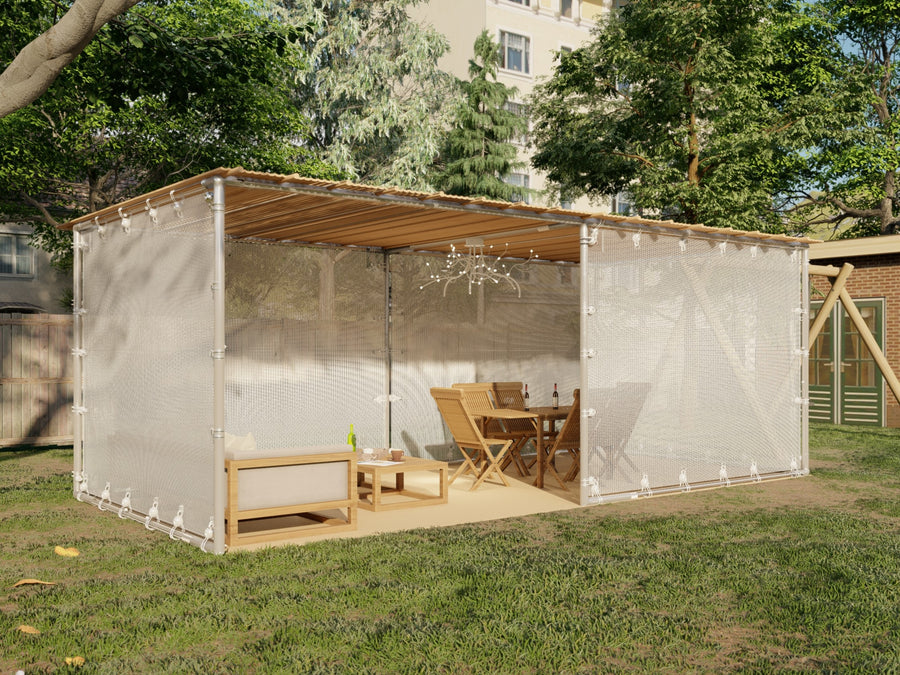
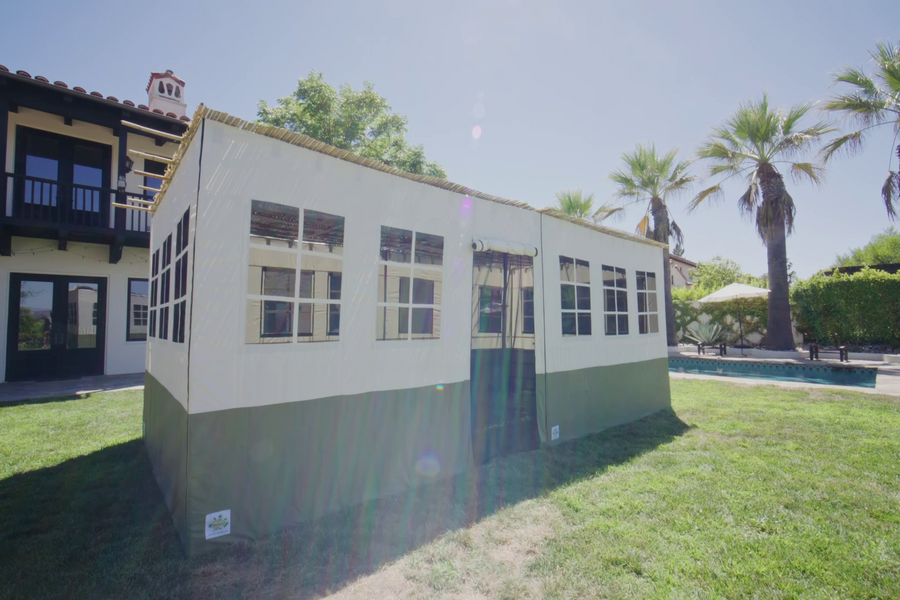
Portable Sukkot create an obvious challenge.
If dismantling a Sukkah is problematic, what exactly is someone supposed to do with a travel Sukkah?
Leave it behind at every stop?
Obviously not.
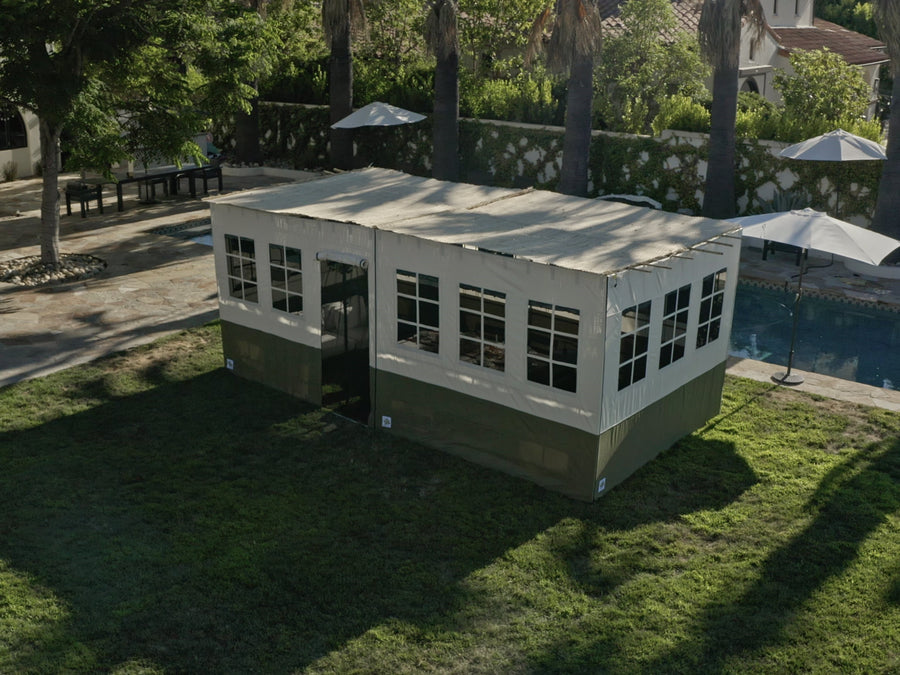
Many authorities recognize that portable Sukkot were designed with assembly and disassembly as part of their intended use.
When the entire purpose of the structure is mobility, the discussion changes significantly.
This is one of the reasons portable Sukkah cases are often treated differently than someone deciding to dismantle a permanent backyard setup halfway through the holiday.
Final Thought: The Sukkah Was Never Meant to Be Perfectly Practical
A fully weatherproof entertainment center with mounted screens, built-in storage, and pre-packed teardown logistics might be very efficient.
It might even be beautiful.
But the Sukkah was never really designed to maximize convenience.
It was designed to pull people slightly out of it.
Out of the house.
Out of routine.
Out of permanence.
Even if, somewhere along the way, someone still tries watching a cooking show in it while nervously checking hurricane forecasts.