




Table of contents
First Things First: What Makes a Sukkah Roof Valid? The Slanted Roof Question: Is Flat a Requirement? Translation into Normal Language: What About Those Pop-Up Canopies? The Pergola Dilemma: Diagonal Wooden Slats 1. Is this considered an “old Sukkah”? 2. Does Diagonal Shade Count as “More Shade Than Sun”? The Big Concern: Gezeirat Tikrah What If There Are Metal Beams Above the Schach? Slanted Roof? Yes. Slanted Walls? Maybe. Practical Takeaways (Without Panicking) Final Disclaimer (The Responsible Kind)
A not-so-flat exploration of slanted Schach, pergolas, and pop-up canopies
Every year, as Sukkot approaches, someone stands in their backyard (or balcony, or driveway) staring up at a frame and thinking:
“Is this a kosher Sukkah…or am I about to build the world’s most festive invalid hut?”
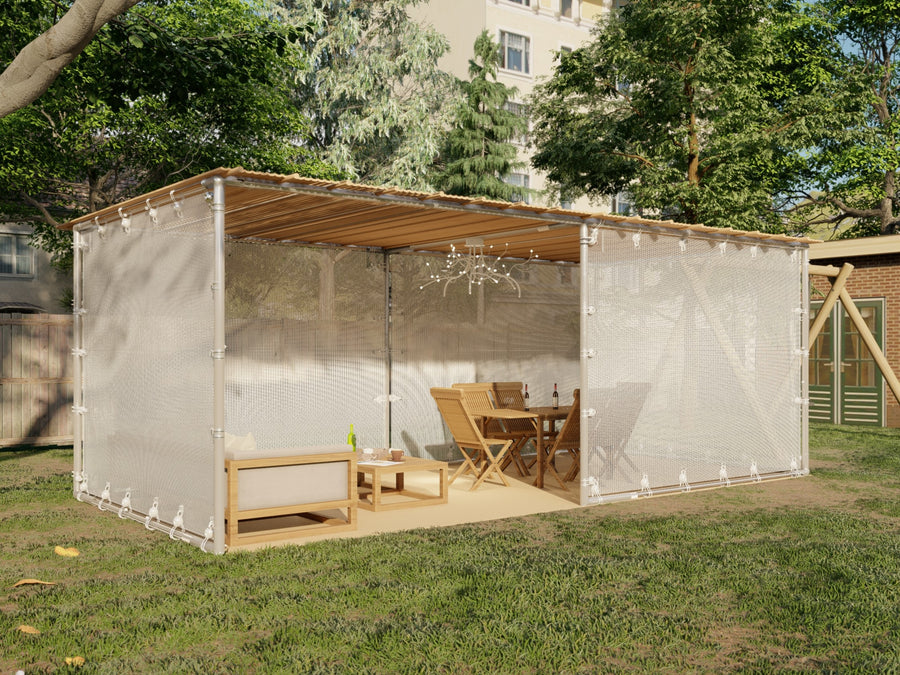
The question usually starts with something innocent. A pop-up canopy. A pergola. A slanted metal frame that looked like a great idea at the hardware store.
And then the panic sets in.
Does the Schach (the natural roofing material placed on top of a Sukkah) have to be perfectly level?
What if the roof is slanted?
What if there are beams above it?
What if the sun shines through at 9am but not at noon?
And what on earth is gezeirat tikrah?
Let’s unpack this – with sources, clarity, and only mild roofing anxiety.
First Things First: What Makes a Sukkah Roof Valid?
Before diving into angles and diagonals, here’s the basic idea.
A kosher Sukkah must have:
At least three walls
A minimum interior space of 7 by 7 tefachim (a tefach is a halachic handbreadth – roughly 3–4 inches)
A minimum height of 10 tefachim
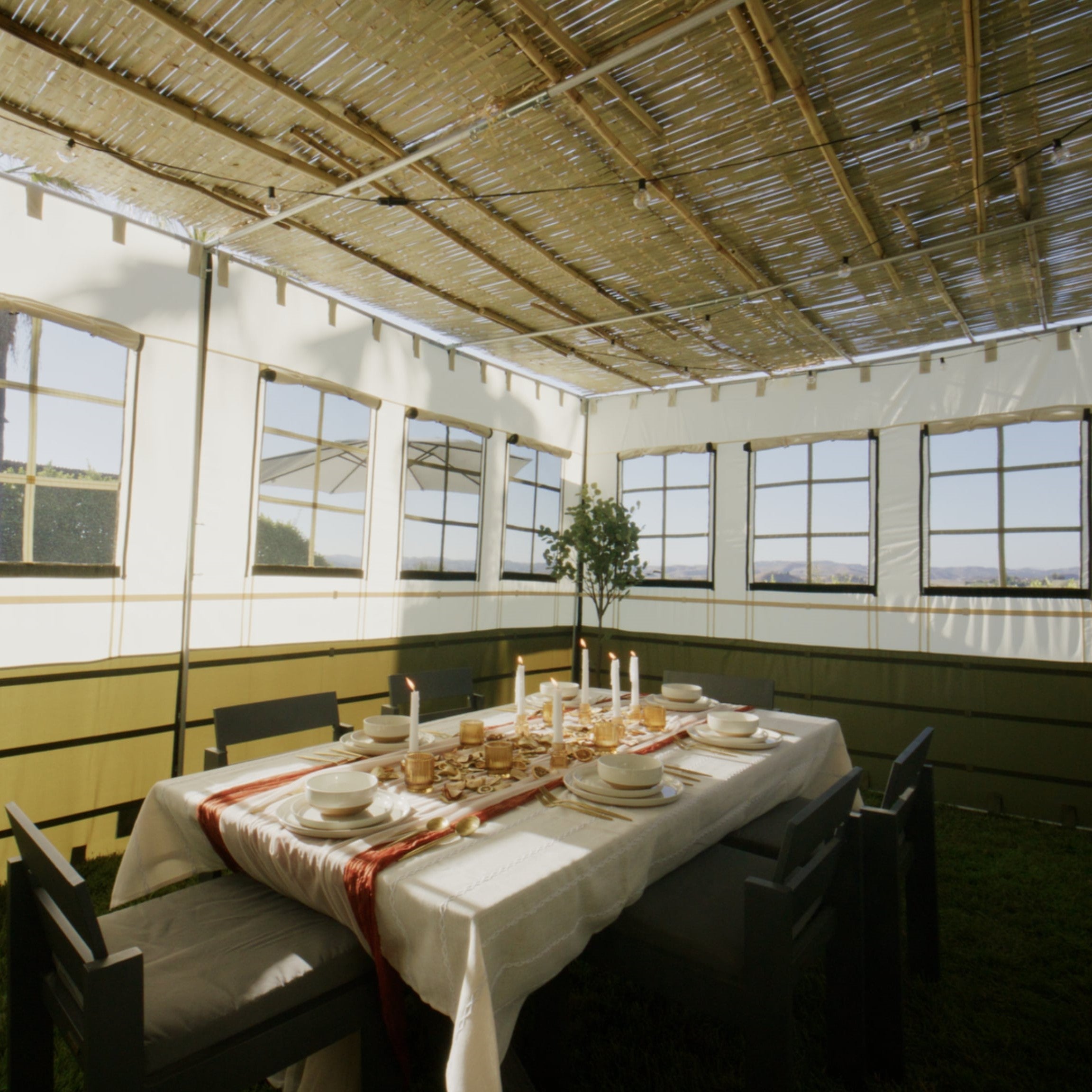
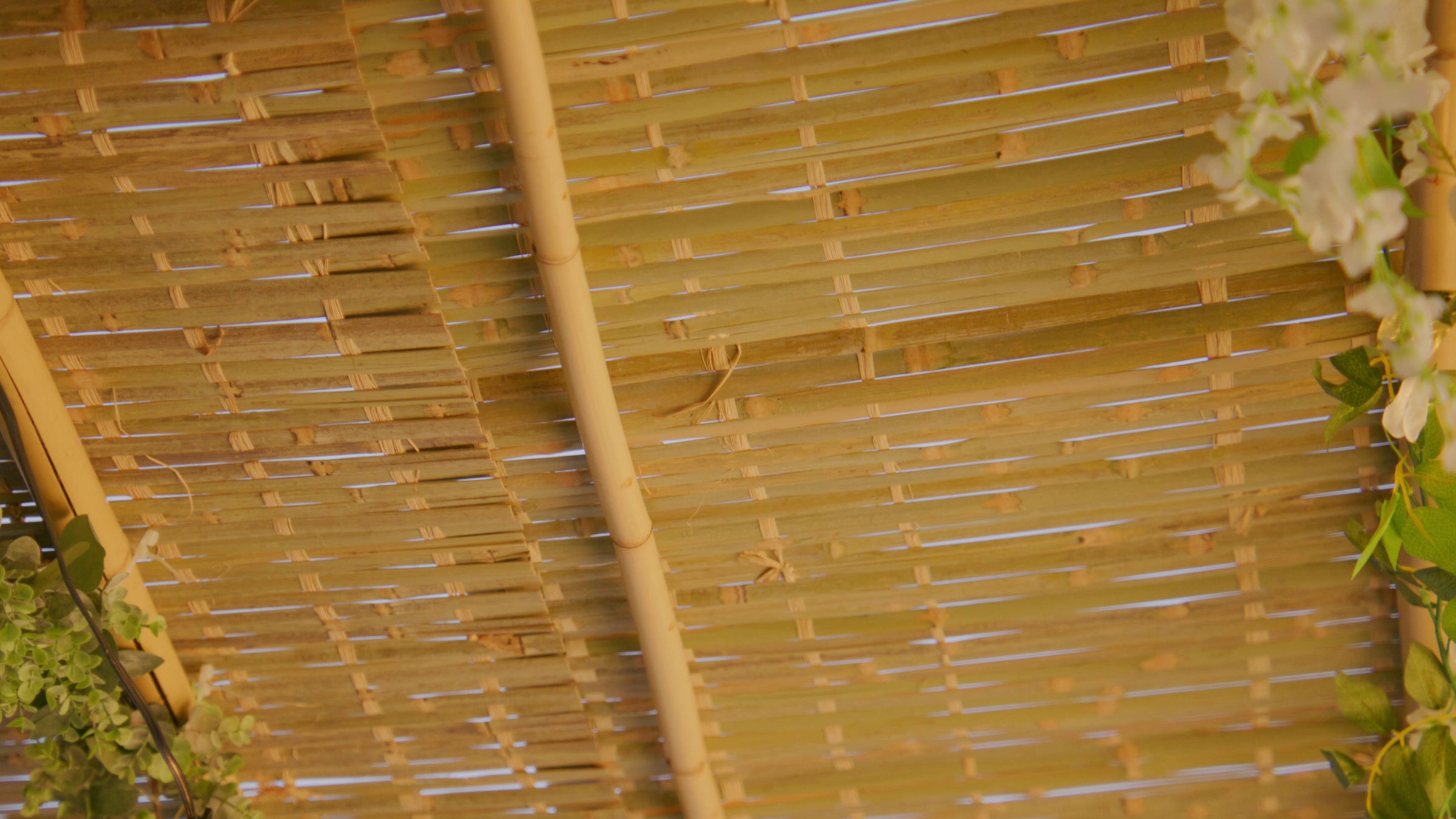
Roofing made of Kosher Schach – natural materials detached from the ground (like bamboo, branches, reeds), which provide more shade than sun
The shade requirement is known as:
צילתה מרובה מחמתה
Tzilata merubah mechamata – “its shade is greater than its sunlight.”
If the sun outnumbers the shadows, your Sukkah is basically a decorative patio.
The Slanted Roof Question: Is Flat a Requirement?
Short answer: No, the Schach does not need to be perfectly level.
But (and you knew there was a but), there are parameters.
The Shulchan Aruch addresses a case where the walls themselves lean inward and meet at the top like a tent – meaning there is no flat roof area at all. That structure is invalid. However, if there is even one tefach of horizontal roofing, the Sukkah can be valid [Shulchan Aruch Orach Chaim 631:10].
In other words:
A pure A-frame tent with no flat top? Problematic.
A structure with slanted sides but at least a small flat roof section? Potentially fine.
Additionally, the Rema (Rabbi Moshe Isserles) adds that the Sukkah must contain the required 7x7 tefachim of usable space at a height of 10 tefachim within the valid structure [Rema to OC 631:10].
Translation into Normal Language:
A peaked gazebo? Fine – as long as the interior space meets the minimum measurements and there is some flat roofing area.
The halachah does not demand architectural perfection. It demands usable shaded space.
What About Those Pop-Up Canopies?
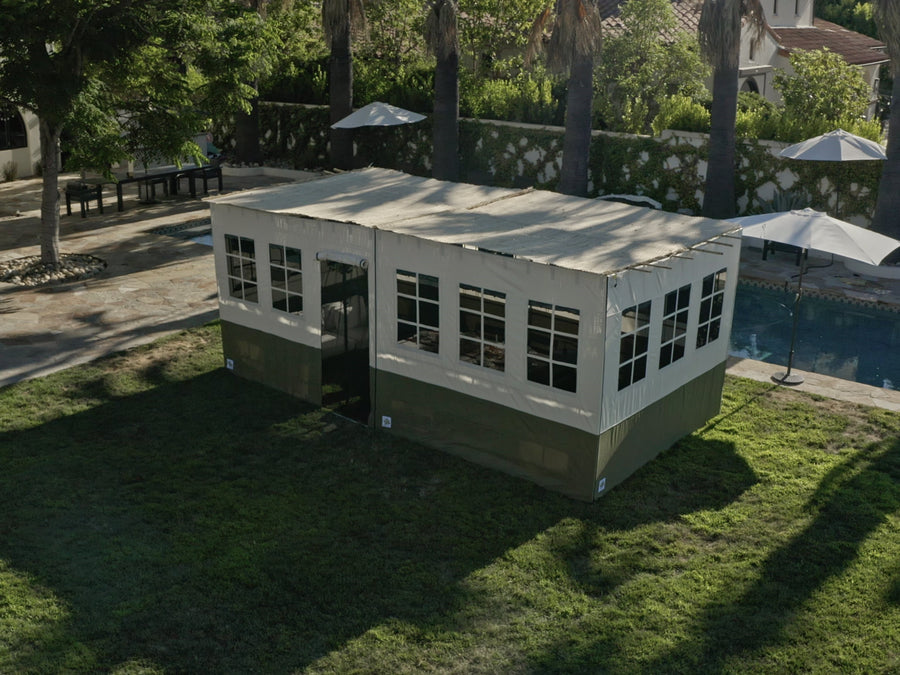
You know the ones. Metal scissor-frame. Pointy fabric top. Appears at every summer barbecue.
If the walls are vertical and substantial – more than a tefach high – and you place kosher Schach over the slanted roof supports, you’re generally in good shape (assuming proper construction and enough shade).
The key is not whether it looks like a ski lodge. The key is whether the halachic dimensions and shade requirements are met.
So no, your Sukkah does not need to resemble a suburban dining room ceiling.
The Pergola Dilemma: Diagonal Wooden Slats
Now let’s level up.
Picture a permanent wooden pergola. Wooden beams running diagonally at a 45-degree angle. In the morning, sunlight streams through. By noon, the Sukkah is mostly shaded.
Two big questions arise:
1. Is this considered an “old Sukkah”?
There’s a halachic concept called:
סוכה ישנה – Sukkah Yeshanah
An “old Sukkah,” meaning a structure built long before Sukkot without specific intent for the mitzvah.
The Mishnah Berurah explains that if the roofing was originally placed for shade (which pergolas typically are), it does not require refreshing. Even if it did, refreshing can be accomplished simply by lifting and repositioning the Schach slightly before the holiday [Mishnah Berurah 636:3–4].
So the dramatic annual roof renovation? Probably unnecessary.
A gentle lift-and-settle? Sufficient if needed.
2. Does Diagonal Shade Count as “More Shade Than Sun”?
Here’s where geometry enters the Sukkah.
The halachic requirement is that the Schach provides more shade than sun overall, not necessarily at every hour of the day.
If in aggregate the roofing produces more shade than sunlight within the usable Sukkah area, it meets the requirement of tzilata merubah mechamata.
The halachah does not require you to calculate solar angles at equinox. It requires that the Sukkah function as a shaded dwelling.
If at most times it is predominantly shaded – you're likely fine.
Unity isn’t just inspirational. It’s jurisdictional.
The Big Concern: Gezeirat Tikrah
Now we come to the slightly intimidating phrase:
גזירת תקרה – Gezeirat Tikrah
Literally, “the decree of the ceiling.”
This rabbinic concern arises when roofing materials resemble standard house ceilings. If the beams are wide enough, it may look like you’re sitting under a regular roof rather than under Schach.
Classically, boards wider than four tefachim (roughly 12–16 inches) can trigger this concern.
Narrow wooden slats? Usually less problematic.
Thick structural boards? That’s when you start asking a competent halachic authority.
The concern isn’t physics – it’s aesthetics and perception.
If it looks like your dining room ceiling, that’s a problem.
If it clearly looks like Sukkah roofing, you’re in better territory.
What If There Are Metal Beams Above the Schach?
This is a common scenario: A metal frame supports the structure. Schach is placed beneath or between metal bars.
Does the metal invalidate everything?
Not necessarily.
The Shulchan Aruch discusses building a Sukkah under a roof where the tiles were removed but the underlying beams remain. The Sukkah is valid, provided the Schach itself is kosher [Shulchan Aruch OC 626:3].
The Mishnah Berurah explains an important distinction:
If the beams themselves are kosher Schach material (like thin wooden lathes), they can potentially be incorporated.
If they are metal (which is invalid for Schach), the area directly beneath them is treated as lacking Schach.
But – and this is crucial – that doesn’t invalidate the entire Sukkah.
It simply means that:
The valid Schach must still provide more shade than sun overall.
One should not sit directly under invalid covering.
Think of it like this:
The metal bars create small “dead zones” of coverage. As long as the rest of the Sukkah compensates with sufficient valid Schach, the structure can remain kosher.
Slanted Roof? Yes. Slanted Walls? Maybe.
If the walls lean inward and meet like a teepee with no flat top at all – that’s where we hit issues [OC 631:10].
But a standard gazebo shape, pergola, or slightly angled support beams? Totally workable.
The halachah is more flexible than people assume.
It’s not measuring degrees with a protractor. It’s measuring usable shaded dwelling space.
Shabbat shalom – and may your walls always do double duty.
Practical Takeaways (Without Panicking)
Let’s summarize:
✔ A Sukkah roof does not need to be perfectly level.
Slanted Schach is fine if there is sufficient valid roofing space and required dimensions are met [OC 631:10].
✔ A pergola can work.
If the slats provide more shade than sun overall and are halachically acceptable materials, it may be valid. Refreshing may not even be required if it was built for shade [MB 636:3–4].
✔ Metal support beams do not automatically invalidate everything.
They create non-Schach zones, but the Sukkah can remain kosher if enough valid Schach remains [OC 626:3; MB ad loc.].
✔ Gezeirat Tikrah is about appearance.
Very wide boards that resemble a permanent ceiling may raise issues.
✔ Measurements matter.
Minimum interior space of 7x7 tefachim and 10 tefachim high must exist within the valid area [Rema to OC 631:10].
Final Disclaimer (The Responsible Kind)
When dealing with real-life construction – especially questions involving board width, beam spacing, or permanent structures – consult a qualified halachic authority.
But rest assured:
If your Sukkah roof is a little crooked, a little slanted, or slightly architectural – you’re in good company.
Judaism has been building temporary huts for over three thousand years.
A diagonal beam is not going to scare it now.