




Table of contents
A Surprisingly Serious Look at the Most Mobile Sukkah Ideas Ever
Every Sukkot, the same question quietly hums beneath the Schach-covered rooftops and backyard Sukkahs: What happens if I’m not home?
More specifically: What happens if I’m on the road, hungry, and staring longingly at a sandwich?
Jewish law famously anticipates life’s inconveniences, including travel. Someone genuinely traveling during Sukkot is exempt from eating in a Sukkah. But Judaism also has a finely tuned radar for loophole abuse, and “Oops, we just happened to plan a whole family Chol HaMoed road trip” doesn’t always pass the sniff test.
Which brings us to one of the most delightfully nerdy questions Sukkot has ever produced:
Can a car double as a Sukkah?
As it turns out, this question has been asked seriously, debated carefully, and answered with real halachic rigor. Let’s take a tour through one of the most creative approaches – the car-door Sukkah – and see why it’s ingenious…and deeply complicated.
First, a Quick Refresher: What Makes a Sukkah a Sukkah?
Before anyone starts popping trunks and measuring door frames, a few Sukkah basics:
A kosher Sukkah needs:
At least three walls
Schach – natural roofing material like bamboo mats or branches
Minimum interior space of 7 by 7 tefachim (a tefach is a handbreadth; roughly 3–4 inches, depending on opinion)
Minimum usable height of 10 tefachim
And it has to function as a dirat adam – a livable human dwelling, not a theoretical geometry experiment
Now, onto the cars.
The Car-Door Sukkah: When Sedans Become Temporary Sanctuaries
The first idea starts with a bold premise: What if the car itself supplies the walls?
Picture this:
A sedan is parked. On one side, both the front and rear doors are opened wide. Schach is laid across the top, resting on the doors. A person sits in the narrow space between them, very low to the ground, enjoying a meal and a sense of halachic adventure.
At first glance, this sounds…ambitious. But halachically, it’s not as wild as it seems.
How Could This Possibly Work?
The logic relies on a few key halachic concepts:
Lavud
This principle says that gaps smaller than three tefachim (roughly 9–12 inches) are considered halachically “closed.” So if the bottom of the car door is close enough to the ground, the space underneath doesn’t disqualify it as a wall.
Dofen Akumah (“Bent Wall”)
This allows part of a solid structure (like a car roof) to count as a wall even if it doesn’t run straight up to the Schach – as long as that “bent” portion is no wider than four amot (cubits, roughly 6–7.5 feet depending on measurement standards).
In this case, the far side of the car (the closed doors and roof) can serve as the third wall via dofen akumah – but only if the roof isn’t too wide.
Mechitzot (Walls)
The open doors themselves act as walls, provided they are tall enough and close enough to the ground.
The Practical Problems (a.k.a. Why This Is Harder Than It Sounds)
Once the measuring tape comes out, reality hits fast:
Car width matters: If the roof from the inside of one door to the other exceeds four amot, dofen akumah fails.
Door clearance matters: If the door is too high off the ground, lavud won’t apply.
Schach support matters: Schach must rest on something kosher. Metal car doors don’t automatically qualify, so wooden beams may be needed as intermediaries.
Space matters: Inside measurements must still reach 7×7 tefachim.
Minivans are trouble: Sliding doors, higher clearance, and wider roofs make this nearly impossible without additional props.
In short: yes, it might work – especially with smaller sedans – but it’s the kind of Sukkah that requires a ruler, bricks, wood planks, and a lot of patience.
When Creativity Meets Reality (and a Tape Measure)
At this point, even the most enthusiastic halachic engineer may be thinking: This is clever – but also a lot.
Between checking door clearance, measuring roof width in amot, sourcing kosher Schach support, and figuring out whether today’s sedan qualifies while yesterday’s minivan definitely does not, the car-door Sukkah starts to feel less like a practical solution and more like an advanced elective in Sukkah Geometry.
Which is exactly where a purpose-built travel Sukkah quietly enters the conversation.
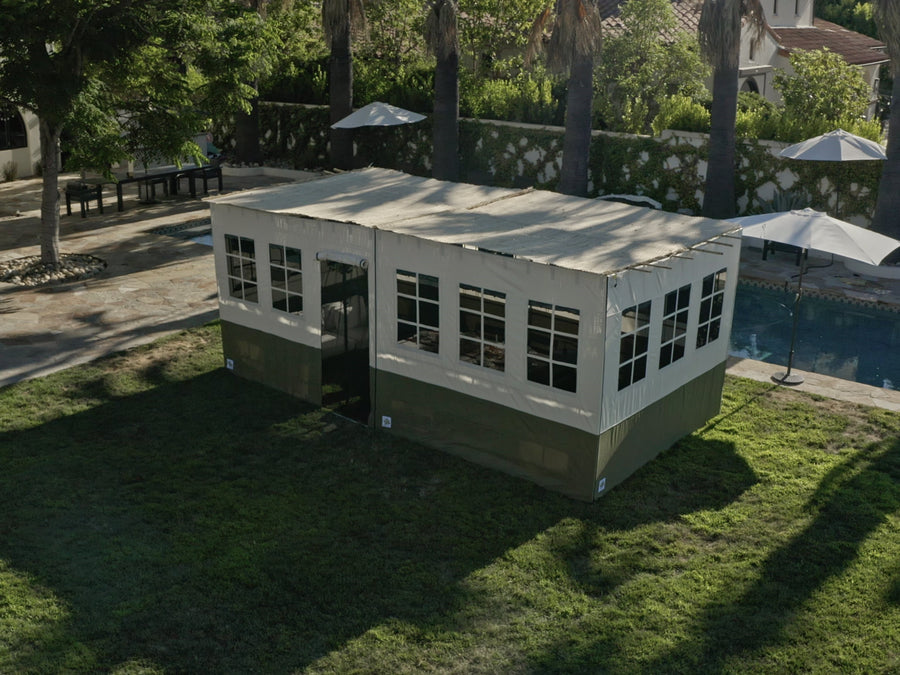
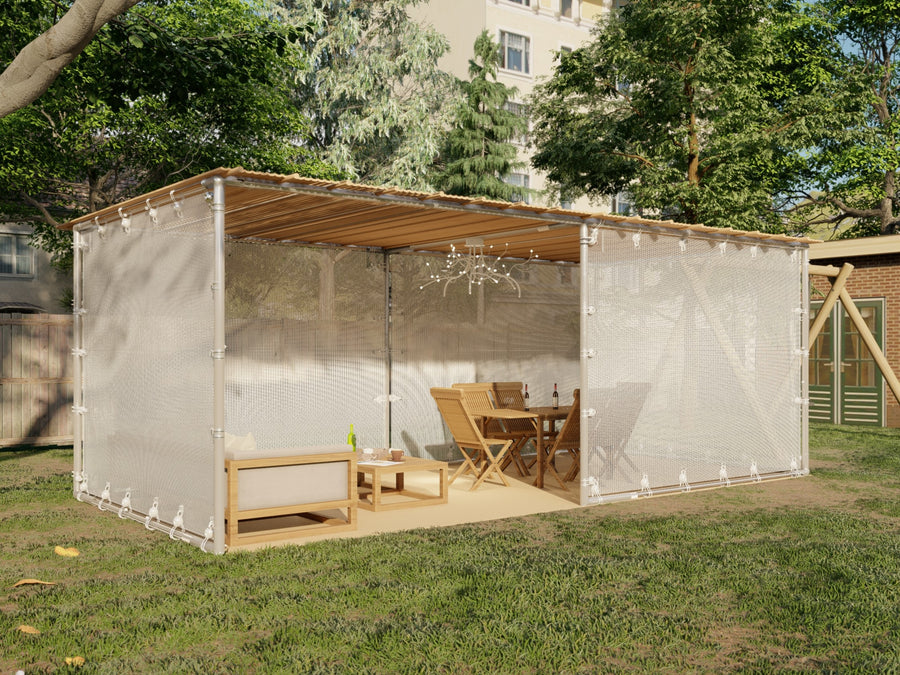
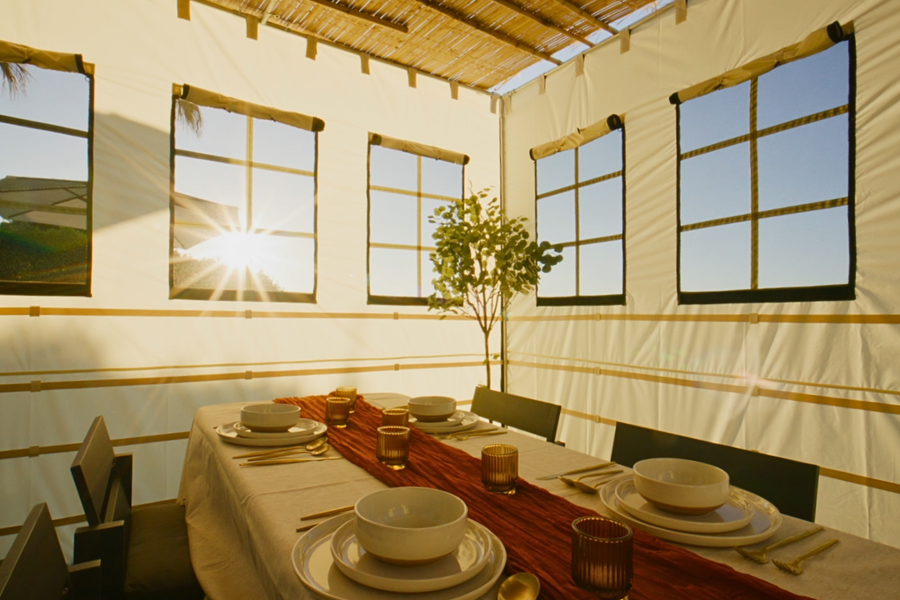
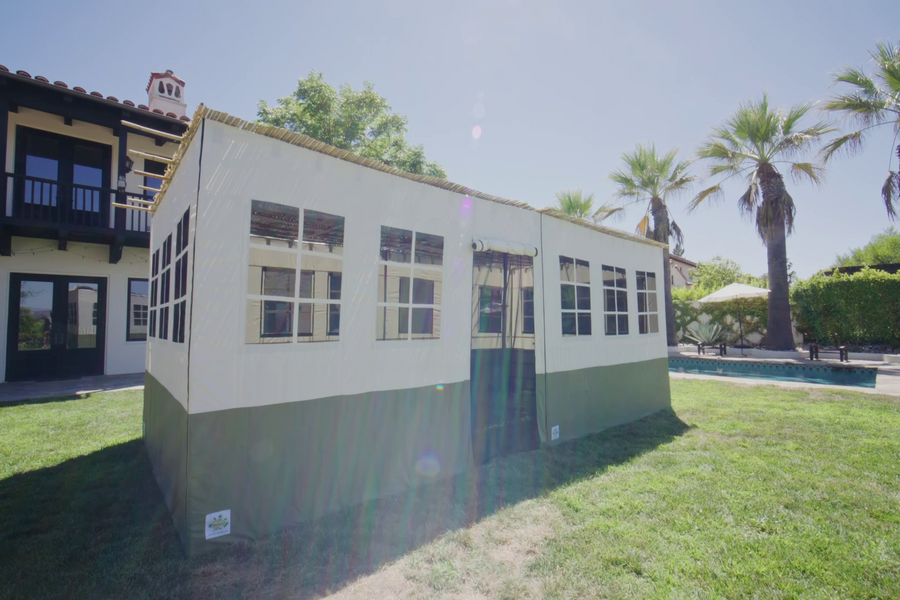
Instead of turning a car into a borderline Sukkah, a portable pop-up Sukkah is designed from the outset to meet halachic requirements – proper walls, usable height, and clear space – without relying on lavud gaps or dofen akumah calculations. It pops up in seconds, folds down easily, fits into a small carry bag, and comes with a mehadrin schach mat, neatly packed in its own easy-carry case.
In other words: no bricks, no beams, no crouching between doors – just a Sukkah that’s clearly a Sukkah, even when you’re on the move.
So…Can a Car Be a Kosher Sukkah?
In theory? Possibly.
In practice? It depends – on measurements, models, margins, and how much patience one brings to Chol HaMoed.
The car-door Sukkah is a fascinating example of how Jewish law seriously engages with real-life scenarios, even ones involving sedans and schach mats. It shows just how flexible – and precise – halacha can be when people genuinely try to fulfill a mitzvah under less-than-ideal conditions.
But it also highlights an important point: while halacha can stretch to meet reality, it doesn’t require turning every road trip into a construction project.
Sometimes the most halachically confident solution isn’t the most creative one – it’s the one that lets people sit comfortably, eat calmly, and focus on the mitzvah itself.
And that may be the most Sukkot takeaway of all.