






Table of contents
Every Sukkot, someone asks it.
Usually around the second day.
Usually while sweating.
Or shivering.
Or being dive-bombed by mosquitoes that seem unusually committed to their mission.
The question goes something like this:
"If Judaism asks people to fast on Yom Kippur, wear tefillin every day, and do all sorts of difficult things, why does the Torah suddenly become so understanding when someone is uncomfortable in a Sukkah?"
It's a fair question.
After all, Judaism isn't exactly famous for saying:
"Don't worry about it if it's inconvenient."
So why is Sukkah different?
Why does halacha contain a famous exemption known as mitzta'er patur min haSukkah – a person who is genuinely uncomfortable is exempt from remaining in the Sukkah?
The answer turns out to reveal something surprisingly profound about how Judaism views hardship, discomfort, and what mitzvot are actually supposed to accomplish.
Wait. You Can Leave the Sukkah Because You're Uncomfortable?
Yes. Really.
The concept is called:
Mitzta'er patur min haSukkah.
Translation:
"A person experiencing significant discomfort is exempt from the Sukkah."
Not because the mitzvah isn't important.
Not because Judaism suddenly lowers its standards.
And definitely not because someone doesn't feel like eating outdoors.
Rather, the exemption comes from one of the central principles of Sukkot:
תשבו כעין תדורו – Teshvu K'ein Taduru
Translation:
"Dwell in the Sukkah the way you dwell in your home."
(Sukkah 26a)
And that phrase changes everything.
The Home Test
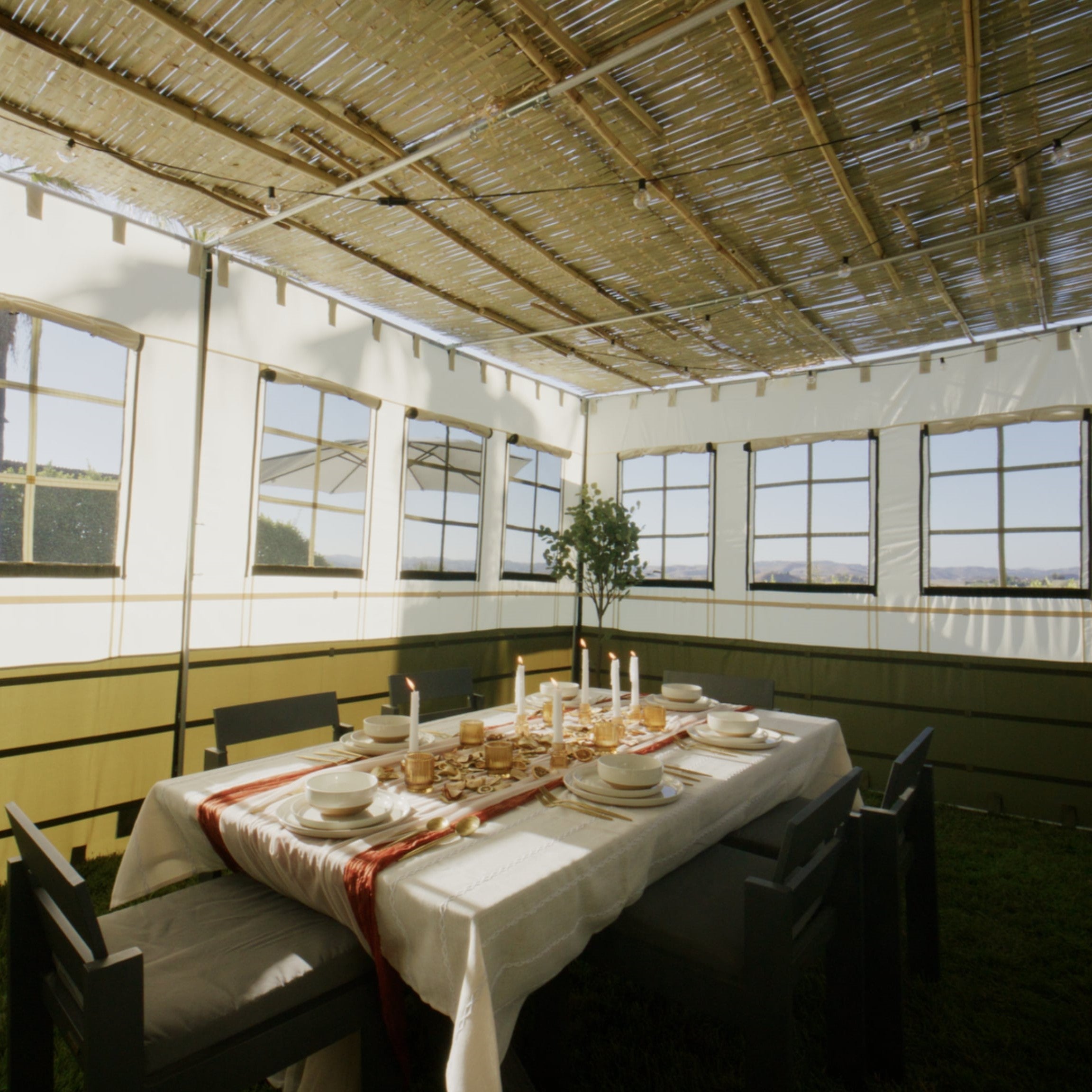
Imagine a person sitting in their dining room.
Now imagine:
Rain dripping onto the table
freezing wind blowing through the room
unbearable heat
clouds of mosquitoes
a smell that would make a garbage truck reconsider its career choices
Would a normal person stay there?
Of course not.
They would move.
That's exactly the point.
The mitzvah isn't merely to occupy a structure.
The mitzvah is to live there.
And if conditions become so unpleasant that no reasonable person would remain in their own home under those circumstances, the obligation changes.
Because the Torah didn't command people to pretend they're comfortable.
It commanded them to dwell.
The Wilderness Wasn't Supposed to Be Miserable
One of the biggest misconceptions about Sukkot
Many people think Sukkot is designed to recreate the discomfort of wandering through the desert.
The image sounds spiritual:
No permanent home.
Temporary shelter.
Exposure to the elements.
A little suffering builds character, right?
Not exactly.
According to many commentators, Sukkot commemorates the miraculous protection provided during the wilderness journey.
The point wasn't that the Jewish people suffered.
The point was that they were cared for.
The Clouds of Glory didn't function as divine camping equipment.
They functioned as divine protection.
In other words:
The message of Sukkot isn't:
"Remember how miserable the desert was."
It's: "Remember how protected people were despite being in the desert."
Which makes the exemption for discomfort feel far less surprising.
Why Doesn't This Apply Everywhere?
Excellent question.
This is where things get interesting.
Someone struggling through an uncomfortable Sukkah may be exempt.
But someone struggling to put on tefillin doesn't automatically get the same exemption.
Why?
Because Sukkah is unique.
The exemption flows directly from the nature of the mitzvah itself.
The mitzvah requires dwelling.
And dwelling assumes normal living conditions.
Other mitzvot operate differently.
Not Every Mitzvah Uses the Same Rulebook
A common misconception is that pain automatically exempts someone from mitzvot.
That isn't generally how halacha works.
Different mitzvot have different requirements.
For example, tefillin involve additional considerations such as concentration and maintaining proper bodily conditions. A person suffering from certain illnesses may be exempt not simply because of discomfort, but because the technical requirements of the mitzvah cannot properly be fulfilled. (Shulchan Aruch O.C. 38:1; Rambam Hilchot Tefillin 4:13)
In other words:
The exemption isn't necessarily: "This hurts."
It's often: "This mitzvah cannot be performed properly under these circumstances."
Big difference.
Final Thought: The Torah Knows Humans Live in Bodies
Perhaps the most remarkable thing about the Sukkah exemption is what it teaches about Judaism as a whole.
The Torah doesn't ask people to become angels.
It doesn't pretend weather doesn't matter.
It doesn't demand that people sit in a miserable Sukkah while insisting they're having a wonderful time.
Instead, it acknowledges something refreshingly human:
If nobody would tolerate these conditions in their own home, then the mitzvah of dwelling has already made its point.
And perhaps that's the deeper lesson.
Judaism isn't a system that ignores human reality.
It's a system that begins with it.