




Table of contents
When Ingenious Ideas Meet the Limits of Livable Space
At some point during Sukkot, curiosity tends to wander.
First it’s: Could I eat in a Sukkah while traveling?
Then it becomes: Could I technically make one work with what I have nearby?
And eventually, for the particularly determined (or particularly bored on Chol HaMoed), the question escalates to:
What if the Sukkah is already built into the car?
Not the doors. Not the trunk. The sunroof.
It’s a tempting thought. Sunroofs are open to the sky. They’re often surprisingly wide. And if a Sukkah needs schach overhead and walls around it…maybe the car already has most of the structure in place?
Which leads to the next, very serious question:
The Sunroof Sukkah: When the Roof Becomes the Question
The second idea flips the problem upside down.
Instead of asking, Can the car supply the walls? it asks:
Can the sunroof supply the Schach opening?
Many sunroofs are around 30 by 30 inches – easily larger than the minimum 7×7 tefachim. On paper, that’s promising.
The Wall Question: Surprisingly Manageable
In this setup, the car’s existing structure does most of the work:
Doors on both sides count as walls
The windshield and rear window can count as walls, even though they’re slanted
Dofen akumah allows parts of the roof to be treated as walls, up to four amot from the Schach opening
The slant of the windshield isn’t a dealbreaker. Walls don’t have to be perfectly vertical to qualify.
So far, so good.
The Height Problem: Where Everything Falls Apart
Then comes the big issue:
Usable height
A Sukkah must have 10 tefachim of usable airspace over a 7×7 area. And here’s the key point:
You measure from where a person actually lives – not from the car floor under the seats.
Car seats are fixed, solid, and very much part of the interior. That means the measurement starts from the seat cushion upward. In most cars, that simply doesn’t leave enough height to reach 10 tefachim before hitting the roof or sunroof opening.
This isn’t a technicality. The issue isn’t Schach placement – it’s that without enough living space, the structure isn’t considered a dirat adam at all (Aruch HaShulchan, Orach Chaim 633:10).
In other words: even if everything else works, the car just isn’t tall enough to live in – halachically speaking.
So…Can You Eat in One of These?
The honest answer:
In theory, maybe. In practice, probably not.
This car-based Sukkah idea is halachically fascinating and internally consistent if a long list of conditions is met. But they sit right at the edge of what Jewish law considers a livable, intentional Sukkah.
And that’s before even touching the broader question: Should someone go out of their way to create this scenario?
Halachic authorities distinguish between unavoidable travel and recreational trips. While travelers may be exempt from Sukkah, deliberately planning travel to avoid the mitzvah raises eyebrows (Igrot Moshe, Orach Chaim III:93).
Or…There Is a Less Complicated Option
At this point, some readers may be thinking:
This is fascinating – but also feels like a lot of measuring, brick-stacking, and explaining to passersby why the car doors are open.
And that’s fair.
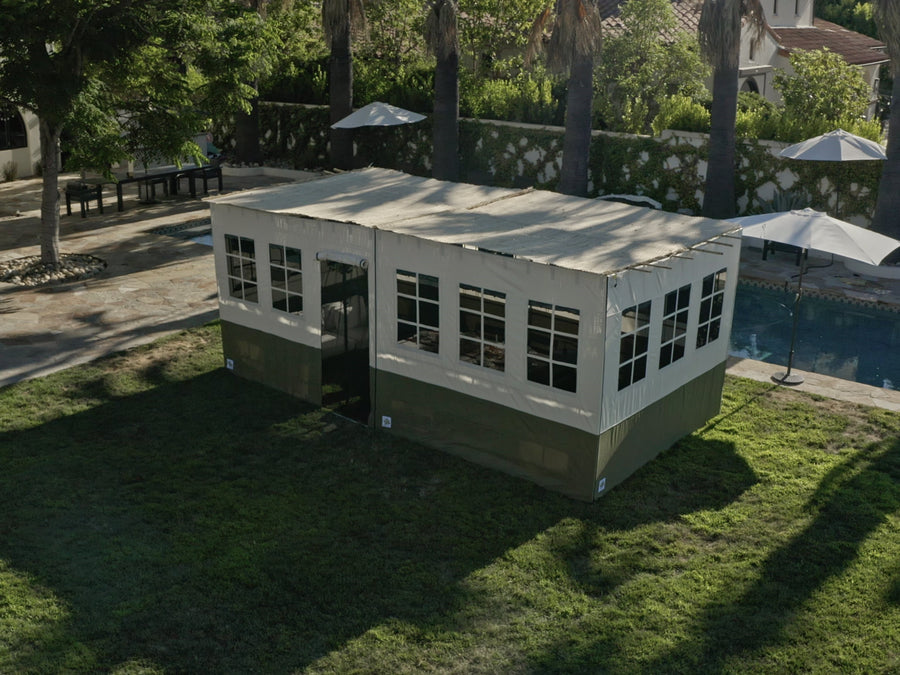
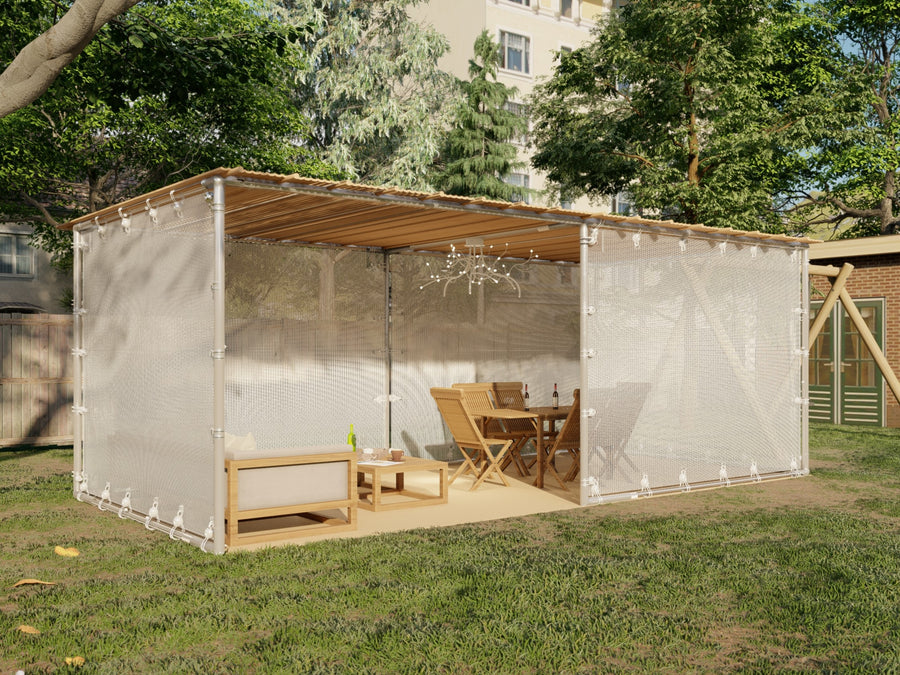
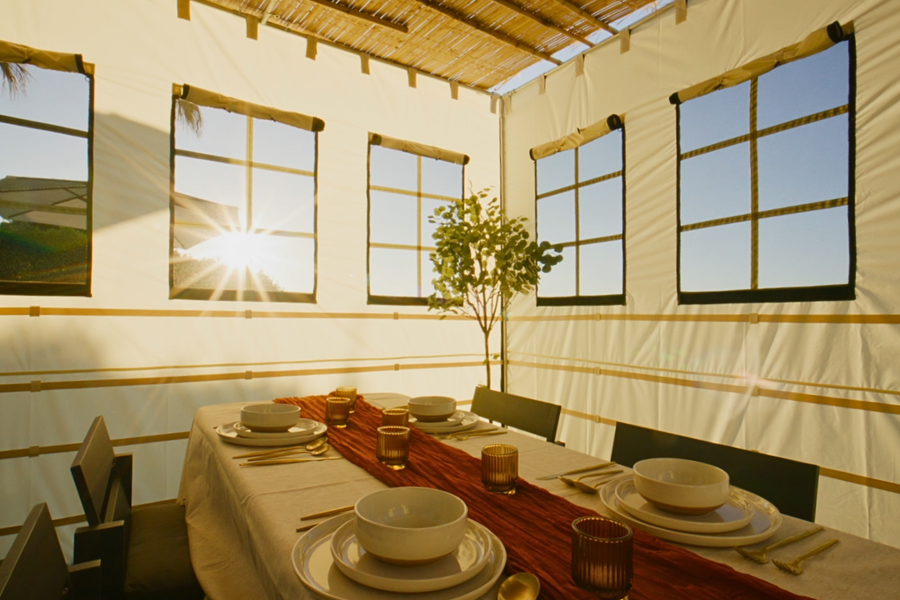
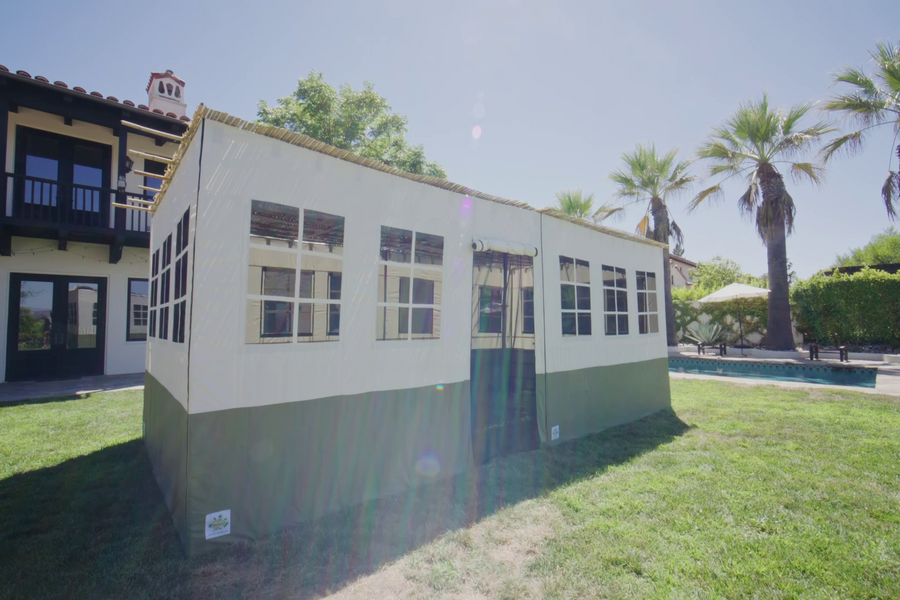
For those who like their sukkot portable but not precarious, there is a more user-friendly alternative that avoids turning a sedan into a halachic geometry lab: the pop-up travel Sukkah.
Unlike car-based Sukkah experiments, a dedicated portable Sukkah is actually designed with halachic requirements in mind – proper wall height, defined space, and schach-ready roofing – without relying on lavud, dofen akumah, or the exact clearance of a Subaru Forester’s doors.
One example is a portable travel Sukkah that folds down for easy transport and sets up wherever you happen to land – roadside stop, park, backyard, or hotel courtyard – while still functioning as a clearly intentional Sukkah. No crouching between doors. No debates about whether the seat counts as floor. And no need to explain to your kids why lunch involves sitting halfway out of a car.
It won’t win points for halachic creativity the way a sunroof Sukkah might – but it will let people eat calmly and upright, knowing they’re in a space that was meant to be a Sukkah from the start.
Which, in the end, may be the most Sukkot-friendly outcome of all.
The Takeaway: Judaism Anticipates Real Life – But Not Gymnastics
These car-Sukkah discussions aren’t jokes or stunts. They’re sincere attempts to balance real-world movement with serious mitzvah observance. They show how deeply Jewish law engages with lived reality – cars, roads, schedules, and all.
But they also reveal something else:
Judaism is remarkably accommodating – without encouraging acrobatics.
If someone truly needs to be on the road during Chol HaMoed, the law makes room for that. If someone is home, a backyard Sukkah beats a Subaru every time.
And if someone finds themselves measuring a sunroof with a ruler on Chol HaMoed?
At least they can say they really thought it through.