




Table of contents
Pergolas, Double Pergolas, and the “Floating” Sukkah Concept Halacha to the Rescue: When Gaps Are OK But Wait – What About Vertical Gaps? Halachic Rule of Thumb for Vertical Gaps Visualizing It: Two Classic Sukkah “Gap” Scenarios The Double-Pergola Scenario: The “Floating Roof” Pergola: Final Tips for the Halachically Curious DIYer In Conclusion: Gap-Filled Creativity Is Kosher – If You Plan Ahead
Every year, as the High Holidays roll around and the scent of fresh pine and kosher l’mehadrin bamboo Schach mats fill the air, many of us start thinking about the same question: How on earth am I going to build my Sukkah this year?
Enter the modern suburbanite or city-dweller with a bit of architectural creativity and, of course, a smartphone in hand.
Cue the scroll through Pinterest or the local home improvement store catalog. And what catches your eye? A pergola! “Ah!” you think, “An elegant frame that could double as a Sukkah! Brilliant!”
But…there’s a catch. Or more precisely: there’s a gap. And as we’ll explore, gaps – whether horizontal, vertical, or floating in mid-air – can quickly turn your kosher Sukkah dreams into a halachic puzzle.
So grab a cup of tea (or a sturdy tape measure), and let’s explore some common Sukkah gap questions – and answers – from folks just like you.
Pergolas, Double Pergolas, and the “Floating” Sukkah Concept
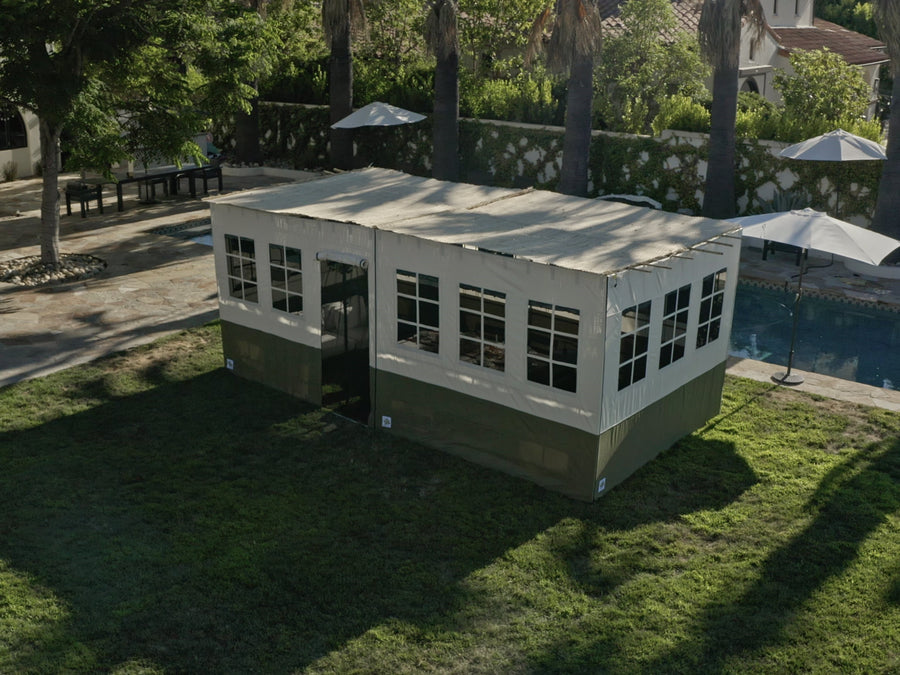
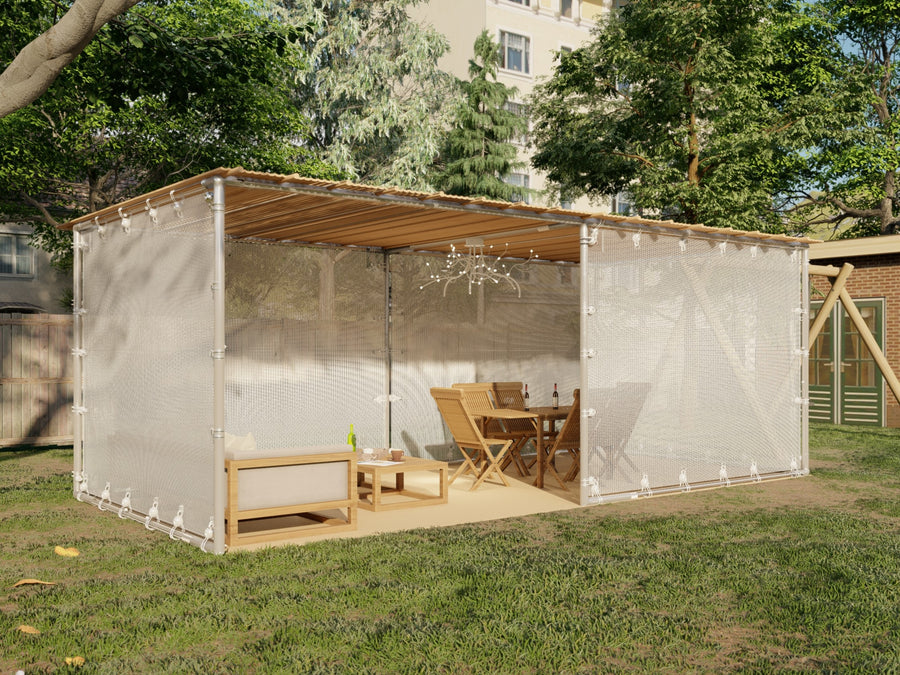
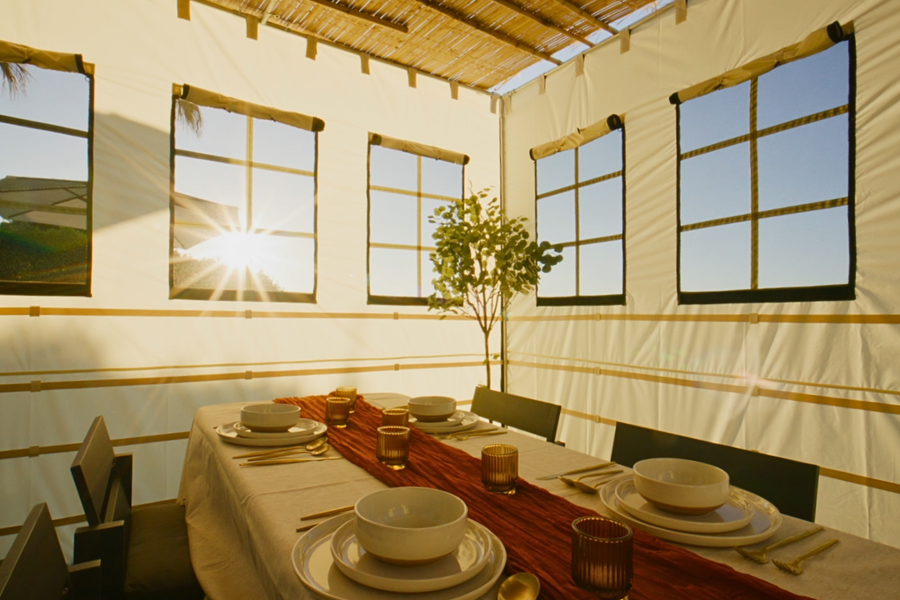
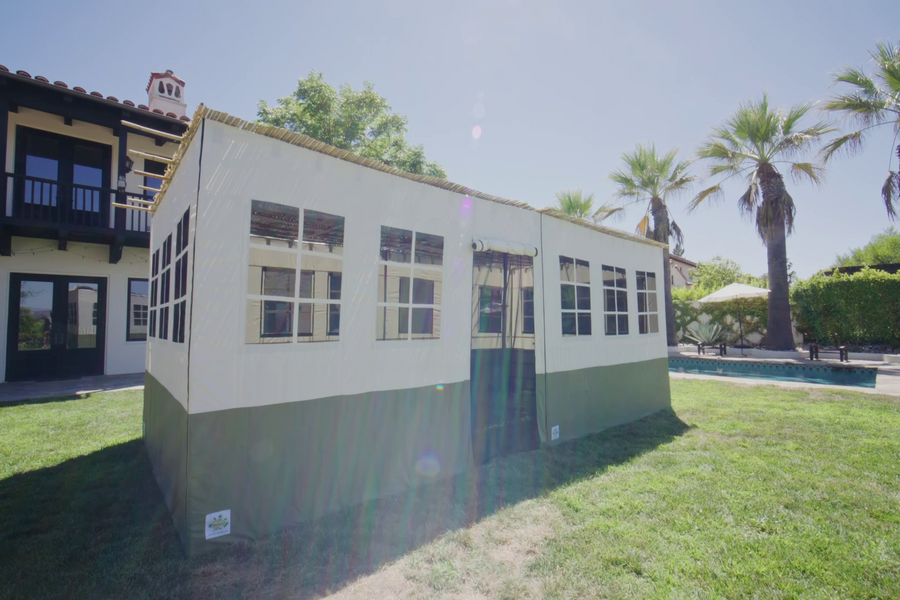
Have you ever spotted a modern pergola and thought: why not use two of them, placed facing each other, with bamboo laid across the top to span the gap between them? The idea is to create one large, airy, and aesthetically pleasing Sukkah with minimal year-round hassle.
Imagine two 4-foot-deep pergolas, with a 2- to 3-foot gap between them, topped with bamboo poles to create an 8’x12’ or even 10’x12’ Sukkah. But the astute Sukkah-builder may pause to ask a critical question:
Is the horizontal gap between the walls a problem?
Halacha to the Rescue: When Gaps Are OK
Jewish law (as summarized in the Shulchan Aruch, Orach Chaim 630:3–5) provides a few guidelines for handling gaps between Sukkah walls:
If you have two parallel walls, you can place a third wall perpendicular to one of them.
This perpendicular wall must be at least four tefachim wide (about 32 cm), and it should be within three tefachim (about 24 cm) of one of the main walls. This closes the structure sufficiently to make it kosher.
The gap on the opposite side (from this perpendicular wall to the far wall) can be up to 10 amot wide (roughly 15 feet or 4.5 meters). If it’s wider than that, you may need to add what’s called a Tzurat HaPetach – essentially, a halachic "doorframe" made of two vertical posts and a horizontal beam.
(Translation moment: Tefach = approx. 8 cm; Amah = approx. 1.5 feet or 45 cm. Tzurat HaPetach = “form of an entrance” – a virtual doorway.)
Bottom line? If you’re crafty with your pergola placement and throw in a third wall or a Tzurat HaPetach where needed, your double-pergola Sukkah could very well be kosher!
But Wait – What About Vertical Gaps?
Now let’s flip things around – quite literally. What if you’re an enterprising builder with a pergola at a slant, resulting in a gap between the top of the walls and the roofing (typically kosher bamboo Schach mats). This is a classic “lavud” (attachment) question: how much vertical air space is too much?
Put simply: How many centimeters of gap can there be between the wall and the Schach?
Halachic Rule of Thumb for Vertical Gaps
Here’s what the halacha says, in plain English:
As long as your wall is at least 10 tefachim tall (about 80 cm of wall height), there’s no limit to how far above the wall your Schach can be – up to a maximum Sukkah height of 20 amot (roughly 18 meters).
In other words: if your pergola frame gives you sturdy, kosher walls that begin within 3 tefachim (24 cm) of the ground (no excessive open space at the bottom), and those walls are 80 cm tall or more, the gap above them isn’t an issue as long as the edge of the Schach hovers somewhere above the walls.
In fact, the wall doesn’t even need to be solid – a sturdy frame or even spaced posts can suffice if they meet the minimum criteria.
Visualizing It: Two Classic Sukkah “Gap” Scenarios
Let’s summarize with two punchy examples:
The Double-Pergola Scenario:
Two parallel pergolas, 2–3 feet apart.
Bamboo (Schach) covers the whole top, spanning the gap.
-
To make this kosher, add either:
A third perpendicular wall near one side, or
A Tzurat HaPetach across the open side if the gap is larger than 10 amot.
Result: a beautiful, kosher Sukkah with minimal permanent changes to your backyard!
The “Floating Roof” Pergola:
Pergola has an incline, creating a vertical gap between the top of walls and Schach.
As long as the walls are at least 80 cm tall, start within 24 cm of the floor, and the Schach is directly above them, you’re good to go – even if there’s a visible air gap.
Result: no need to panic about a few centimeters of open space between your walls and Schach!
Final Tips for the Halachically Curious DIYer
When in doubt, add a “virtual doorframe” (Tzurat HaPetach) – it’s a surprisingly elegant and flexible halachic solution for many Sukkah gap scenarios.
Measure your walls carefully. The 10 tefachim (80 cm) rule is key for wall height.
Mind both horizontal and vertical gaps. They’re governed by different rules – and a pergola can sometimes trigger both!
Ask a local rabbi if you’re experimenting. While many modern rulings are quite flexible (especially for those who rely on common Eruv practices), there are nuances that a quick consultation can resolve.
In Conclusion: Gap-Filled Creativity Is Kosher – If You Plan Ahead
So, can you build a Sukkah out of pergolas, slanted frames, or unconventional garden structures? Absolutely – if you mind the gap(s).
Halacha doesn’t insist on a medieval fortress or a designer build. It asks for a basic structure that creates a defined space under a kosher covering.
So the next time you spot that trendy backyard pergola or start sketching a creative Sukkah idea on a napkin, remember: With a little halachic savvy and some well-placed bamboo, your gap-filled dreams can still make for a kosher – and very Instagram-worthy – Sukkah.