






Table of contents
Not Just a Hut: The Meaning Behind the Mitzvah The Sukkah Seating Chart: Who Gets Priority? Step 1: Who’s Actually Obligated? Do Guests Automatically Get a Spot? Should Women Eat in the Sukkah? So Why Do Many Women Participate? Sleeping in the Sukkah: Same Rules? Final Thoughts: It’s a Home, Not a Spreadsheet
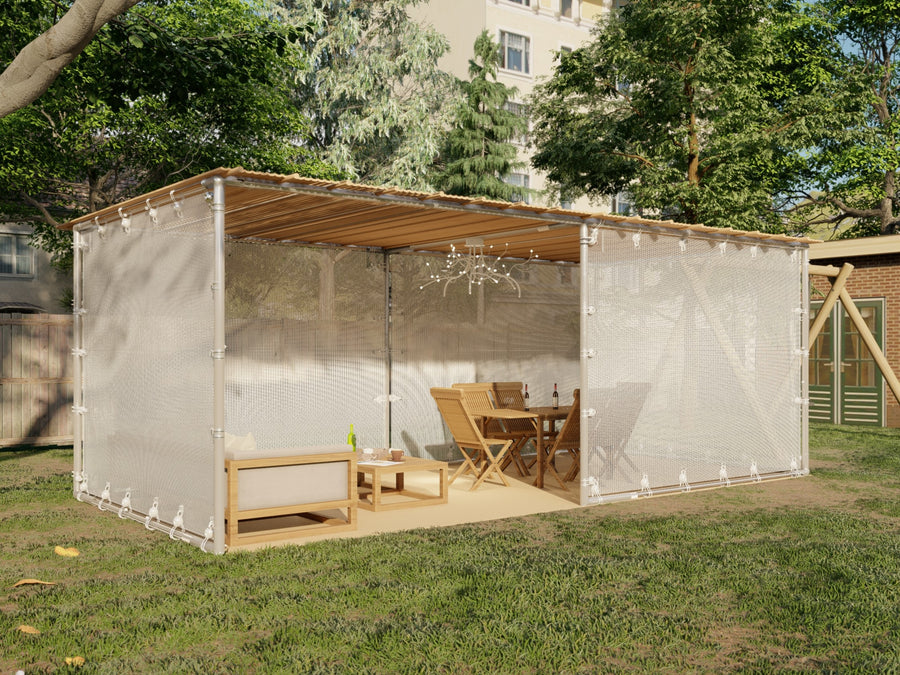
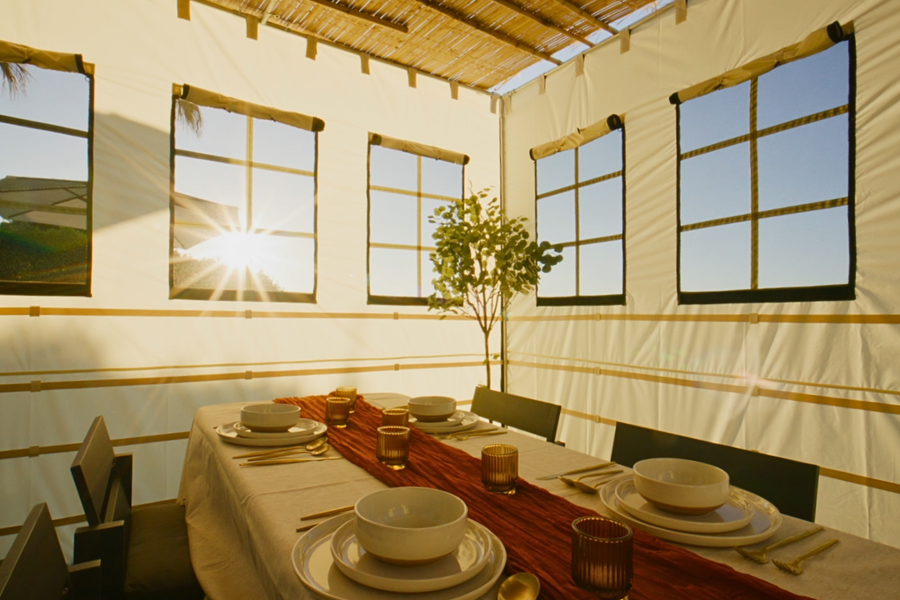
Every year, Sukkot rolls around with its usual mix of joy, leafy roofing, and – inevitably – a few logistical dilemmas. The Sukkah looks spacious when it’s empty. Add a table, a few chairs, a pot of soup… and suddenly it’s a real estate crisis.
But beyond the practical question of who fits, there’s a deeper (and surprisingly nuanced) set of questions:
Does everyone need to be there?
Who takes precedence if space is tight?
And perhaps most intriguingly – what are you actually supposed to be thinking about while sitting there?
Let’s unpack.
Not Just a Hut: The Meaning Behind the Mitzvah
Unlike many mitzvot (commandments), the Torah gives an explicit reason for sitting in a Sukkah:
“So that your generations will know that I caused the Children of Israel to dwell in sukkot when I took them out of Egypt” (Vayikra 23:43).
In plain English: this isn’t just about eating outdoors – it’s about remembering history.
Now here’s where things get interesting. Some halachic authorities (Jewish legal commentators) take this very seriously – so seriously that they say you’re supposed to actively think about this meaning while fulfilling the mitzvah.
What exactly are you remembering?
There are two classic opinions:
Rabbi Eliezer: the Sukkot refer to the “Clouds of Glory” (ענני הכבוד) – divine clouds that protected the Israelites in the desert.
Rabbi Akiva: they were literal huts (סוכות ממש) the Israelites lived in.
Ideally, one should have both in mind when sitting in the Sukkah (Chayei Adam 146). And according to some, if you didn’t have the proper intention (kavanah – focused intent), you might even need to eat another portion to properly fulfill the mitzvah (a stringency noted in Birkei Yosef, Orach Chaim 625).
That said, more mainstream rulings are a bit more forgiving. The Mishnah Berurah, following the Pri Megadim, rules that it’s enough to have general intent to fulfill the mitzvah – you don’t necessarily need to actively meditate on the historical meaning every time you take a bite (Mishnah Berurah 625).
Why So Much Focus on Intent?
So why is Sukkah different? Why all this emphasis on what’s going on in your head?
One explanation lies in the nature of the mitzvah itself.
Some mitzvot are about doing something: eating matzah, shaking a lulav. The action is clear and concrete. Even if your mind wanders, the act itself still carries weight.
But Sukkah is different. It’s less about a specific action and more about a state of being. You’re not just performing a ritual – you’re living in the Sukkah.
This idea shows up in the wording of the blessing:
Not “to enter the Sukkah” or “to eat in the Sukkah,”
But “to dwell in the Sukkah” (leishev baSukkah).
Similarly, other “environmental” mitzvot like tefillin (phylacteries) and tzitzit (fringes) also focus on being in a matzav – a condition – rather than just performing a one-time action. The blessing reflects that: “to wear” rather than “to tie” (Bach, Orach Chaim 8).
When the mitzvah is about being, not just doing, intention becomes more central.
The Sukkah Seating Chart: Who Gets Priority?
Now for the question that turns every peaceful holiday meal into a subtle game of halachic Tetris: what happens when there’s not enough room?
Let’s say the Sukkah can’t fit everyone. Who gets the coveted seats?
Step 1: Who’s Actually Obligated?
First, we need to understand who is required to be there.
According to halacha:
Adult men (13 and older) are obligated on a Torah level.
Boys around age 5–6 and up have a rabbinic obligation for educational purposes (chinuch – training children in mitzvot).
Women, younger children, and others are technically exempt (Shulchan Aruch, Orach Chaim 640:1–2).
So, from a strictly legal perspective, priority would go:
Adult men
Older boys (chinuch obligation)
Everyone else
But Life Isn’t Just a Ranking System
Of course, things aren’t so simple.
Judaism rarely operates in a vacuum of pure hierarchy. There are other values and halachot at play:
Kibbud av va’em (honoring parents)
Hachnasat orchim (hospitality to guests)
Shalom bayit (peace in the home)
And then there’s the guiding principle of Sukkah living:
“Teishvu k’ein taduru” – “You should dwell [in the Sukkah] as you normally live [in your home].”
Meaning: the Sukkah isn’t meant to feel like a cramped, competitive waiting room. It’s meant to feel like a home.
So if, in a normal home setting, one would prioritize:
Eating with one’s spouse
Including guests respectfully
Ensuring elders are comfortable
…then those values should carry over into the Sukkah as well.
In practice? If space is tight, people often rotate. One group eats first, another follows. Not glamorous – but effective.
Do Guests Automatically Get a Spot?
Inviting guests to your Sukkah is a classic mitzvah. But does an invitation guarantee them a seat?
Not necessarily.
If there’s no room, the host isn’t obligated to magically expand the Sukkah (though that would be impressive). However, inviting someone generally implies making reasonable space for them – otherwise, it’s a bit like inviting someone to dinner and handing them a takeout menu.
So while there’s no strict legal claim, there’s certainly a strong expectation rooted in hospitality.
Should Women Eat in the Sukkah?
Here’s another common question: if women aren’t obligated, should they bother?
Short answer: yes – but they don’t have to.
Sukkah is a time-bound positive commandment (mitzvat aseh shehazman grama), and women are generally exempt from such mitzvot. But – and this is key – being exempt doesn’t mean being excluded.
Women who choose to eat in the Sukkah:
Are considered to be fulfilling a mitzvah voluntarily
Receive spiritual reward for doing so (Ran on Rosh Hashanah 33a; Shulchan Aruch 640:1)
Some sources even praise those who go beyond the minimum requirement and participate anyway.
So Why Do Many Women Participate?
A few reasons:
1. Family Life
Sukkot is a deeply communal holiday. Eating separately while everyone else gathers in the Sukkah isn’t exactly appealing.
2. “Living” Means Living Together
Remember teishvu k’ein taduru? People don’t normally split family meals based on technical obligations.
3. Spiritual Opportunity
Even without obligation, there’s value in participating. As one source puts it, those who do so “merit heavenly reward” (Kaf HaChaim 640:5).
Sleeping in the Sukkah: Same Rules?
In theory, yes. Eating and sleeping in the Sukkah carry similar levels of obligation (Shulchan Aruch 639:1–2).
In practice… it gets complicated.
Factors like comfort, weather, and family dynamics come into play. There are even discussions about whether discomfort (mitzta’er) – including being separated from one’s spouse – can exempt someone from sleeping in the Sukkah.
So while the ideal is full-time Sukkah living, reality tends to involve a bit of flexibility.
Final Thoughts: It’s a Home, Not a Spreadsheet
Sukkot brings together law and real-life logistics in a way few holidays do.
Yes, there are hierarchies of obligation.
Yes, intention matters.
And yes, sometimes you need a seating rotation plan.
But at its core, the Sukkah is meant to feel like a home – just one with slightly questionable roofing and preferably with enough chairs.