





Table of contents
First Things First: What Does “Eating in the Sukkah” Actually Mean? Can You Eat in the Sukkah While Standing? But Isn’t Eating While Standing…Bad? The Truly Delicate Question: What If Someone Steps Outside Mid‑Bite? Crowded Sukkot and Real‑World Hosting So What’s Actually Required? The Bigger Picture
A Practical Halachic Guide to Eating in the Sukkah
Sukkot has a way of turning the most basic human activities into surprisingly philosophical exercises. Sitting. Standing. Chewing. Swallowing. Hosting guests. Suddenly, all of them come with footnotes.
Somewhere between the soup ladle and the challah knife, a question inevitably pops up: Am I doing this right? Can someone eat standing up in the Sukkah? What if the Sukkah is packed? And what happens if a person steps outside mid‑bite – does the mitzvah follow the mouth, the food, or the swallow?
As it turns out, Jewish law has opinions on all of this. Let’s unpack them – simply and without requiring anyone to balance a plate while flipping pages of a halachic code.
First Things First: What Does “Eating in the Sukkah” Actually Mean?
The Torah tells us to “dwell” in the Sukkah during Sukkot (Vayikra 23:42). The Sages famously explain this with the phrase teshvu ke’ein taduru – “you shall dwell [in the Sukkah] the way you dwell in your home.”
That framing is everything.
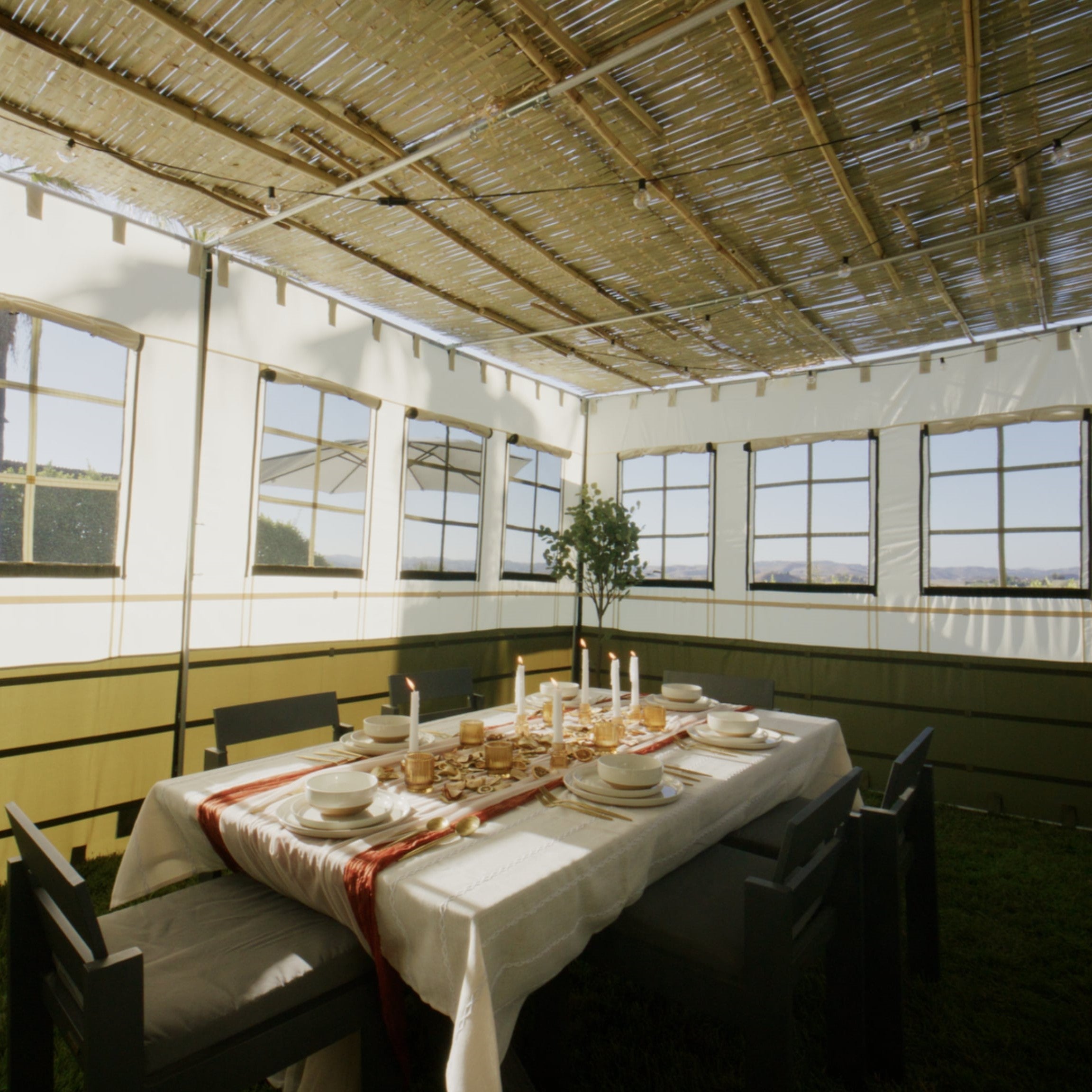
It means the mitzvah of Sukkah isn’t about striking a particular pose or enduring ritualized discomfort. It’s about normal living. Eating. Socializing. Existing like a human being – just with branches overhead.
Once that principle is in place, many of the edge‑case questions start to make a lot more sense.
Can You Eat in the Sukkah While Standing?
Despite the phrase “sit in the Sukkah,” the answer is refreshingly straightforward: yes.
The word “sitting” is descriptive, not literal. It’s meant to convey permanence – the idea that the Sukkah is functioning as a dwelling space. If someone eats a meal while standing inside the Sukkah, they have still fulfilled the mitzvah fully and may recite the blessing without hesitation (Aruch HaShulchan, Orach Chaim 643:3).
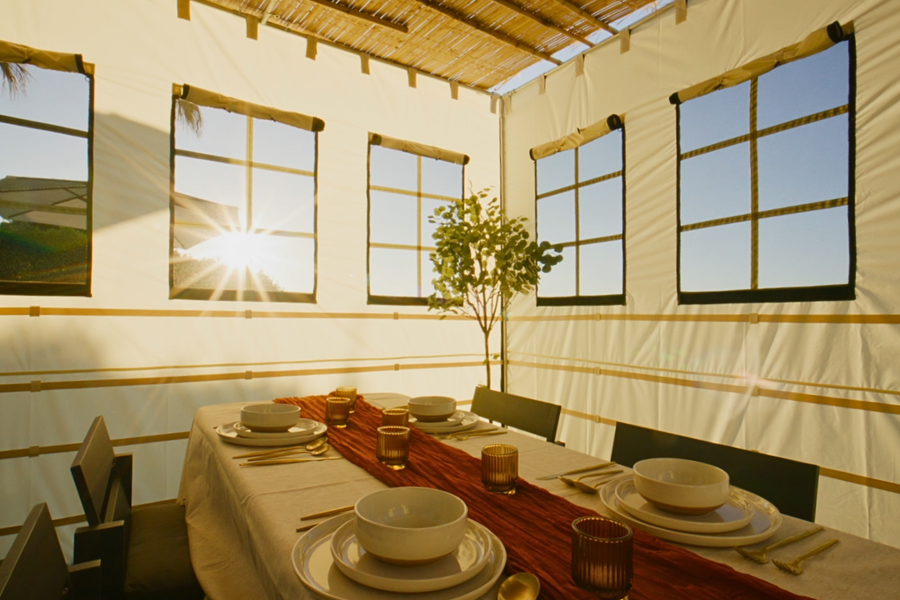
This is especially relevant in the real world, where Sukkot sometimes resemble cozy cafés and sometimes resemble standing‑room‑only concerts. If guests outnumber chairs, halacha does not demand awkward musical‑chairs logistics. Standing, buffet‑style meals inside the Sukkah are perfectly valid.
In short: posture is optional. Location is not.
But Isn’t Eating While Standing…Bad?
Here’s where things get layered.
There is a long‑standing Jewish preference for eating while seated. Several sources describe eating while standing as lacking refinement, particularly for a talmid chacham – literally a “Torah scholar,” but practically meaning someone perceived as learned or representative of Torah values (Derech Eretz Zuta 5:1).
Other texts frame this preference as derech eretz, proper conduct, rather than strict law. Some sources even associate eating while standing with minor health concerns (Gittin 70b; Rambam, Hilchot De’ot 4:3).
However – and this is key – it is not forbidden. The Talmud explicitly discusses scenarios where people eat while walking or standing, without raising any halachic red flags (Berachot 51b; Shulchan Aruch, Orach Chaim 183:9).
So how does this play out in the Sukkah?
Simply put: even if one prefers sitting when possible, standing does not invalidate the mitzvah. Halacha distinguishes between ideal etiquette and legal fulfillment, and the Sukkah falls squarely on the side of legal fulfillment.
The Truly Delicate Question: What If Someone Steps Outside Mid‑Bite?
This is where halacha zooms in to almost microscopic detail.
Jewish law defines “eating” not as placing food in one’s mouth, but as hana’at garon – literally “throat benefit,” meaning the act of swallowing. Chewing, while significant, is considered part of the eating process leading up to that moment.
Because of this, halachic authorities rule that if someone begins eating bread in the Sukkah and then steps outside, they should not continue chewing until they return inside (Yalkut Yosef, Moadim p. 143; Sha’ar HaTziyun 639:29; Meiri on Sukkah 26b).
The concern is simple and practical: chewing increases the likelihood of accidentally swallowing. And swallowing bread outside the Sukkah is precisely what one is meant to avoid.
So no, the mitzvah doesn’t “travel” with the food. The Sukkah remains the Sukkah. If a person exits mid‑bite, halacha politely suggests pressing pause.
This isn’t about drama – it’s about maintaining clarity around where the act of eating is halachically completed.
Crowded Sukkot and Real‑World Hosting
Anyone who has hosted on Sukkot knows the tension: wanting to welcome guests generously while working with Sukkah space that was measured very optimistically.
Halacha is remarkably accommodating here.
The obligation to eat in the Sukkah applies to people, not to food. Plates can be filled elsewhere and brought inside. Guests can rotate seating. And if standing makes the experience more pleasant and less chaotic, standing is perfectly acceptable.
The Sukkah is meant to be lived in – not tiptoed around.
So What’s Actually Required?
Let’s zoom out and summarize the practical takeaways:
Eating bread or other meal‑level foods must take place inside the Sukkah.
Sitting is not required; standing still fulfills the mitzvah (Aruch HaShulchan, OC 643:3).
Eating while standing is generally permitted, though some view sitting as preferable decorum (Derech Eretz Zuta 5:1; Rambam, Hilchot De’ot 4:3).
Halachic “eating” is completed at swallowing, not chewing.
If someone exits the Sukkah with food in their mouth, they should pause chewing until they return (Sha’ar HaTziyun 639:29).
And perhaps most importantly: halacha consistently bends toward normal human behavior. It expects intention and care – but not acrobatics.
The Bigger Picture
Taken together, these details reveal something quietly beautiful about the mitzvah of Sukkah.
The Torah doesn’t ask people to eat unnaturally, host stiffly, or obsess over technicalities at the expense of joy. Instead, it offers a framework flexible enough to handle real life – crowded tables, moving guests, half‑chewed bites and all.
As long as the Sukkah remains the center of the meal, the mitzvah is intact. Whether seated or standing, formal or casual, the goal is the same: to dwell, comfortably and consciously, in the space the holiday creates.
And if someone has to pause mid‑chew to make that happen? Judaism is patient enough to wait.